
 PDF Download
 PubReader
 Export Citation
 Email the Author
 Share Facebook
 Share Twitter
 Cited by 0 Article
 Metrics (View:43)









Introduction
Aquatic products, including fish, shellfish, crustaceans, and mollusks, are essential raw materials for the global processed food industry. However, due to their unique biochemical compositions and delicate muscle structures, they are highly susceptible to various forms of quality deterioration during storage, distribution, and processing. These factors impose significant limitations on their industrial utilization. Specifically, high-temperature and high-pressure sterilization processes, such as retorting, induce complex physicochemical changes within seafood tissues. These changes often lead to a pronounced decline in sensory quality, with textural degradation being the most critical issue (Kong et al., 2007; Majumdar et al., 2017).
Fish muscle is characterized by relatively short, thick fibers and minimal connective tissue compared to terrestrial meat. When exposed to elevated temperatures during retorting, these muscles undergo severe softening, leading to a substantial loss of structural integrity. In contrast, in mollusks—such as squid and octopus—and shellfish, heat-induced denaturation primarily affects myofibrillar proteins (e.g., actin and myosin) and connective tissue proteins (e.g., collagen). This process accelerates moisture loss and reduces water-holding capacity (WHC), resulting in an excessively tough and rubbery texture that intensifies during subsequent storage (Kong et al., 2007; Ovissipour et al., 2017). Additionally, the cleavage of peptide bonds during high-temperature heating contributes to the loss of characteristic flavors. Meanwhile, crustaceans like shrimp exhibit pronounced tissue softening and structural fragility, leading to poor chewiness and elasticity post-processing (Majumdar et al., 2017).
Furthermore, the majority of seafood is preserved via freezing and subsequently thawed prior to processing, which causes textural deterioration through freezing-induced denaturation. This phenomenon arises from the disruption of protein molecular structures and cryocoagulation caused by ice crystal formation. During thawing, bound water often fails to rebind to the proteins, resulting in a spongy texture and permanent tissue damage. When subjected to the high temperatures and pressures of retorting, previously frozen seafood with compromised protein integrity undergoes accelerated degradation, leading to more severe quality loss than fresh or refrigerated counterparts (Mohan et al., 2006; Nakazawa & Okazaki, 2020).
Current commercial approaches to mitigate retort-induced textural damage focus on optimizing sterilization parameters or employing chemical additives. While minimizing heating time and temperature can reduce thermal damage, this approach is limited by the necessity of eliminating heat-resistant spores (e.g., Bacillus spp.) to ensure safety during room-temperature distribution. Since significant textural deterioration typically begins above 110–115°C, achieving the standard sterilization target of 121°C remains a challenge. Although alkaline additives like polyphosphates and sodium bicarbonate are used to enhance water retention in mollusks and shellfish, they are often less effective or unsuitable for fish and shrimp, which possess inherently softer tissues (Chantarasuwan et al., 2011; Furuta et al., 2022).
In light of these limitations, the present study developed species-specific physicochemical pretreatment strategies to control contrasting texture deterioration during retort processing. Unlike previous studies focusing mainly on individual additives or processing conditions, this study integrated chemical pretreatments (organic acids, dietary fibers, phosphates, and calcined shell calcium) with physical treatments (superheated steam and vacuum treatment). Specifically, texture-hardening strategies were established for fish susceptible to excessive softening, whereas texture-softening strategies were developed for mollusks prone to excessive toughening. This integrated approach provides a scientific basis for developing practical processing strategies to improve the textural stability and quality of high-quality retorted seafood products. Further validation through pilot-scale production, sensory evaluation, storage stability, and economic feasibility studies is required to confirm their industrial applicability.
Materials and Methods
Among various aquatic products, pollock (Gadus chalcogrammus), mackerel (Scomber japonicus) and long-arm octopus (Octopus minor) were selected as representative model species because they exhibit contrasting textural changes during retort processing. Pollock and mackerel undergoes tissue softening due to collagen gelatinization and muscle protein denaturation, whereas long-arm octopus exhibits tissue toughening caused by muscle contraction and connective tissue shrinkage. Therefore, these species were used as models for developing texture-hardening and texture-softening pretreatment strategies, respectively.
Fresh, never-frozen pollock, mackerel and long-arm octopus samples were purchased from a local seafood market in Seoul, Korea. After refrigerated transportation to the laboratory, non-edible parts, including skin and viscera, were removed, and the edible portions were used for subsequent pretreatment and retort-processing experiments. The samples were cut into uniform pieces (approximately 2.5×2.5×1.0 cm; length×width×height), each weighing 7±1 g. Subsequently, the samples were stored under refrigerated conditions (5–10°C) to preserve freshness and prevent alterations in sensory attributes, including taste, flavor, and texture. To minimize experimental error, only the body meat was used; this specific portion was selected based on preliminary experiments, which confirmed its consistent hardness values through repeated measurements (Cheng et al., 2014; Sun et al., 2018). All experiments were performed using five independent biological replicates (n=5), and instrumental hardness was measured twenty times for each treatment (n=20). The treatment concentrations were determined based on preliminary optimization experiments and relevant published literature to achieve the maximum texture-modifying effect while minimizing undesirable changes in product quality.
To mitigate the textural deterioration of retorted fish, food-grade organic acid preparations—including citric acid powder (ESFOOD Inc., Gunpo, Korea) and vinegar powder (Nutragen Inc., Guri, Korea), as well as apple, lemon, kiwi and pineapple powders (Nutragen Inc.)—were employed as hardening agents. Apple, lemon, kiwi, and pineapple powders were selected because they are commercially available food-grade ingredients containing relatively high levels of naturally occurring organic acids known to influence muscle protein denaturation and tissue texture. In addition, their selection was based on preliminary screening experiments and previous studies demonstrating their potential to improve the structural stability of seafood muscle during thermal processing. The treatment concentrations were selected based on preliminary optimization experiments and previous literature to maximize texture-modifying efficacy while minimizing undesirable quality changes. Citric acid powder (food grade, purity≥99%, no additives) and vinegar powder (food grade, without additives) were each dissolved at a concentration of 1% (w/w), while apple, lemon, kiwi, and pineapple powders (100% fruit powders without carrier materials) were each prepared at 2% (w/w) in purified water at 20°C. The samples were soaked in these solutions for 12 h under refrigerated conditions (5±1°C) prior to further processing to maintain sample quality and minimize microbial growth and undesirable biochemical changes.
In addition to organic acids, dietary fibers derived from seeds, grains, and vegetables were evaluated as supplementary hardening agents. Food-grade chia seed, oat and chicory fiber powders (Nutragen Inc.) were each dissolved in purified water (20°C) to a final concentration of 2% (w/w). The pollock samples were immersed in these fiber solutions for 12 h. Preliminary experiments confirmed that concentrations of 1–2% (w/w) effectively enhanced tissue firmness without adversely affecting sensory attributes, such as taste, flavor, or overall acceptability.
A multifunctional complex mixture was prepared to prevent textural softening of retorted pollock by integrating dietary fiber, organic acid components, and starch. Chia seed fiber, citric acid, vinegar powder, and rice starch were blended at an equal ratio to prepare the complex hardener. The prepared mixture was subsequently applied as a pretreatment agent for retorted pollock.
Following pretreatment, the samples were rinsed with purified water and blanched in a constant-temperature water bath (VS-1991W PID controller, Vision Science, Daejeon, Korea) at 95°C for 2 min. During blanching, continuous stirring and water circulation were maintained to ensure uniform heat transfer to both the surface and the core of the samples. Blanching is a widely applied technique in the processing of aquatic products, serving to inactivate endogenous enzymes that degrading quality and to reduce undesirable fishy odors. In order to consider the commercial applicability of the process developed in this study, a blanching process was also applied. Finally, the effects of these pretreatments on textural improvement were evaluated through mechanical texture analysis in comparison with untreated controls (Sun et al., 2018; Głuchowski et al., 2019).
To mitigate the textural deterioration of retorted mollusks, food-grade complex phosphate (purity≥99%), sodium bicarbonate (purity≥99%), and highly alkaline calcined shell calcium (purity≥95%; ESFOOD Inc.) were employed as softening agents. The treatment solution was prepared by dissolving complex phosphate and sodium bicarbonate at concentrations of 0.5% (w/w) each, while calcined shell calcium powder at a concentration of 0.3% (w/w), in purified water maintained at 20°C. Long arm octopus were immersed in the solution for 12 h. Following immersion, the washing and blanching procedures were performed under the same conditions as those utilized for the organic acid treatment.
To evaluate the efficacy of superheated steam (SHS) as a physical pretreatment for enhancing the tissue firmness of retorted seafood, samples were subjected to high-temperature, short-time (HTST) heating. This process was performed using a superheated steam oven (QF5100CB-RCL, Naomoto Co., Osaka, Japan) at a steam temperature of 400°C for 5 min.
To investigate the synergistic effects of vacuum treatment and the complex hardener, pollock samples were immersed in a solution containing dietary fiber and organic acid components. The samples were then washed, dehydrated, vacuum-packaged, blanched, and retort-sterilized.
To evaluate the effects of retorting on the textural properties of pretreated pollock and long arm octopus, twenty rectangular samples were packaged in heat-resistant aluminum pouches. Each pouch was filled with a seasoning solution containing refined salt (Hanju Corp., Ulsan, Korea), sugar (CJ Cheiljedang Corp., Seoul, Korea), and monosodium glutamate (CJ Cheiljedang Corp.) at a weight ratio of 3:3:0.3 (w/w/w). The seasoning solution was utilized instead of purified water to simulate commercial processing conditions. Sterilization was conducted at 121.1°C and 2.1 kgf/cm2 for 20 min using a water cascading pilot retort (Stock Pilot-Rotor 900, Hermann Stock Maschinenfabrik, Neumünster, Germany). The F0 value at the thermal center of the muscle tissue was maintained at 15 to ensure the inactivation of heat-resistant spores.
The textural changes in pretreated seafood samples following thermal processing were evaluated by measuring hardness, a widely used indicator of structural integrity in thermally processed seafood, using a Texture Analyzer (TA-XT2i, Stable Micro Systems Ltd., Surrey, UK). The operational parameters were configured with a pre-test speed of 2.0 mm/s, a test speed of 1.0 mm/s, and a post-test speed of 2.0 mm/s. Compression was applied using a 5 mm diameter cylindrical plunger to a target strain of 20%. Data acquisition was initiated upon reaching the designated strain level. To ensure statistical reliability, each sample was measured 20 times. Outliers were identified and excluded based on Chauvenet’s criterion before calculating the mean values.
All experimental data are expressed as the mean±standard deviation of five independent replicates. The statistical significance of differences among treatment groups was evaluated using one-way analysis of variance (ANOVA) at a significance level of p<0.05. Post-hoc comparisons were conducted using Duncan’s multiple range test to identify specific differences between means. All statistical procedures were performed using Minitab software (version 13; Minitab Inc., State College, PA, USA).
Results and Discussion
Mollusks and shellfish subjected to high-temperature (115–121°C) and high-pressure (1.5–2.0 kgf) retorting undergo significant alterations in the tertiary structure of myofibrillar proteins. The intense thermal energy facilitates coagulation and compression, which initially enhance protein–protein interactions, resulting in a firmer and tougher texture. Subsequently, protein denaturation reduces water-holding capacity, thereby promoting tissue shrinkage due to moisture loss and further accentuating toughness (Ceylan & Gokoglu, 2022; Erdem et al., 2022).
In contrast, fish and crustaceans, which possess a relatively loose myofibrillar arrangement, exhibit a distinct degradation mechanism. Under high-temperature conditions, collagen and associated connective tissues dissolve and gelatinize, thereby weakening the inter-myofibrillar bonds that maintain structural integrity. This process results in severe tissue damage and a pronounced softening of the muscle texture. Furthermore, retorting at elevated temperatures may induce the oxidation of unsaturated fatty acids, generating volatile secondary metabolites responsible for undesirable off-flavors (Kong et al., 2008; Hughes et al., 2014).
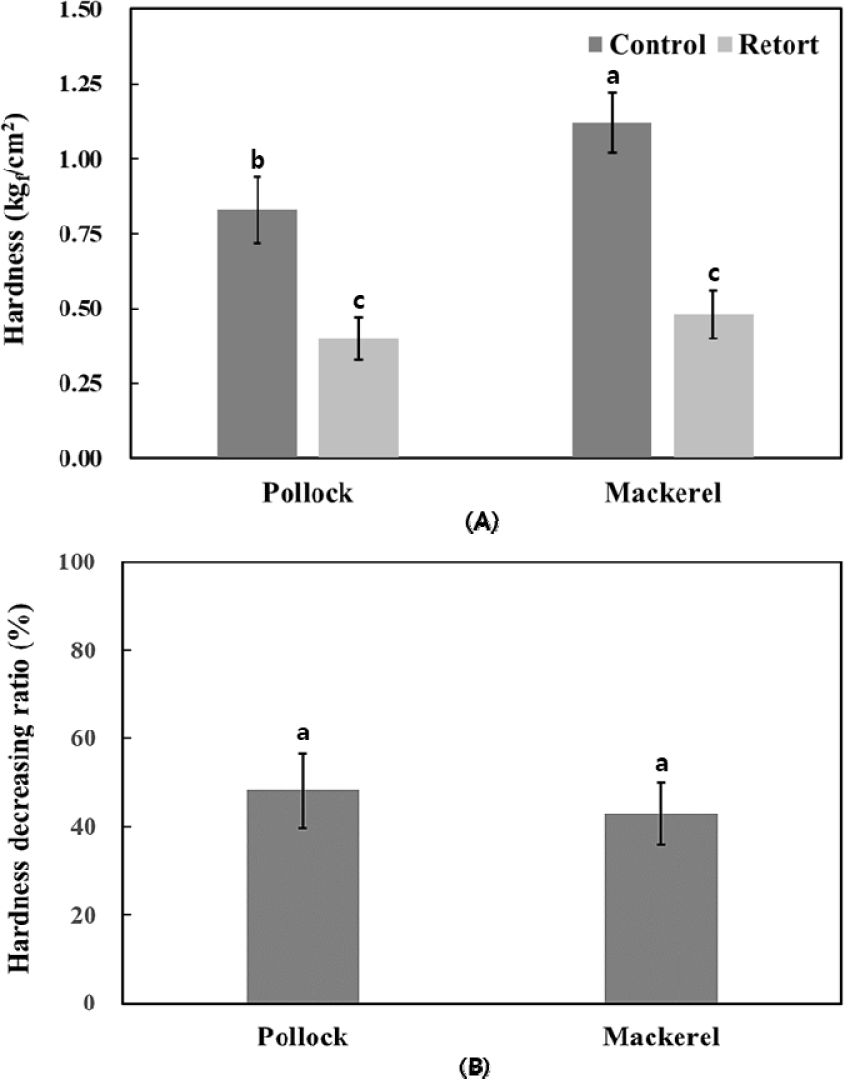
To investigate these textural transitions, pollock and mackerel—species recognized for their high susceptibility to thermal degradation—were selected for analysis. To simulate commercial processing, the samples were rinsed, blanched in purified water at 100°C for 5 min, and hot-air dried at 80°C for 1 h to eliminate excess moisture. Subsequent retort sterilization at 121°C for 20 min led to a significant reduction in textural hardness, decreasing from 0.98 kgf/cm2 (pre-retort) to 0.45 kgf/cm2 (post-retort). This represents a 2.2-fold decrease, with the final hardness maintaining only 54% of the original tissue strength (Fig. 1). These findings confirm that the combined impact of high temperature and pressure induces substantial structural damage to fish muscle, necessitating the application of textural stabilizers.
This study evaluated the efficacy of various organic acid-containing fruit powders—previously identified as promising tissue-hardening agents—on the textural stability of retorted pollock. Treatment solutions were each prepared using fruit powders (apple, lemon, kiwi, and pineapple) at 2% (w/w), while food-grade citric acid and vinegar powders were prepared at 1% (w/w) concentrations, respectively. Pollock samples were immersed in these solutions for 12 h prior to the retort process. Among the treatments, apple powder exhibited the most significant reinforcement of tissue hardness, with a 51% increase relative to the control. Other organic acid sources demonstrated hardening rates ranging from 37% to 46%, confirming that organic acid pretreatment is an effective strategy for enhancing the firmness of retorted fish (Fig. 2).
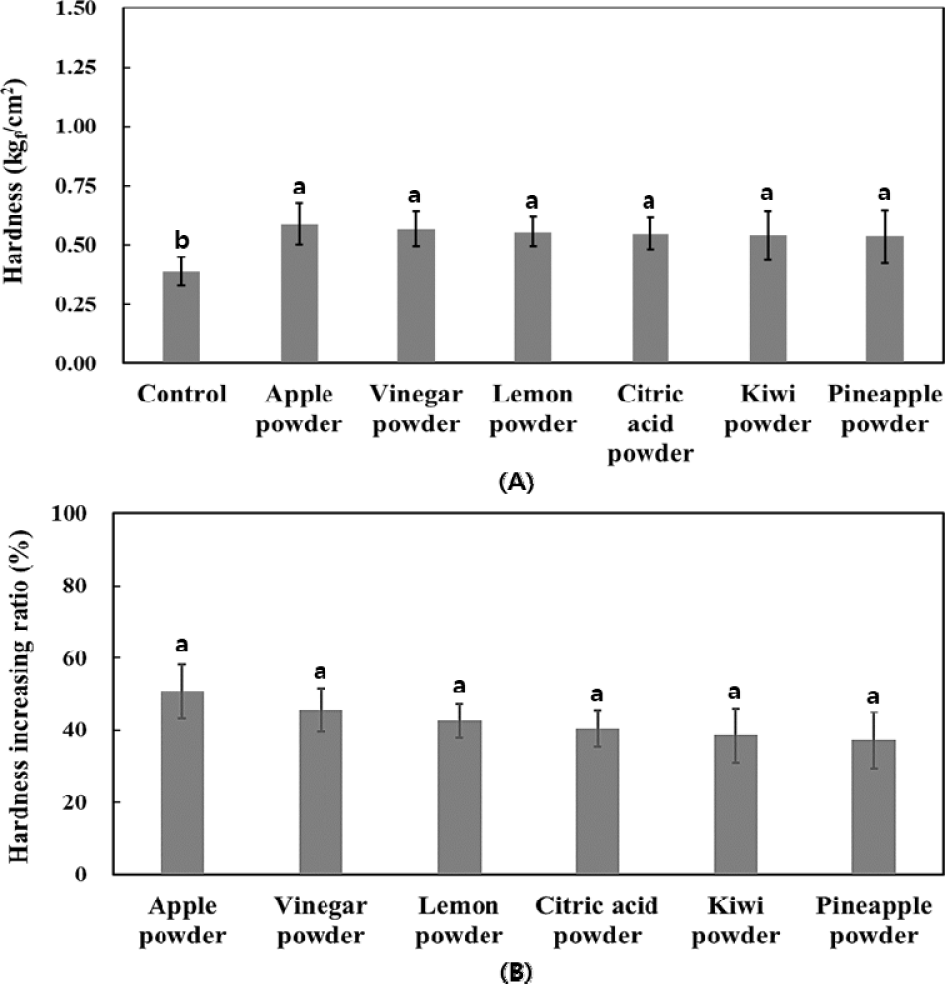
The hardening mechanism induced by organic acids in retorted pollock tissue is primarily attributed to accelerated protein denaturation, promoted coagulation, and reduced water retention. Myofibrillar proteins, which constitute the primary structural framework of pollock muscle, are acidified upon exposure to organic acids, shifting the tissue pH toward the isoelectric point. Approaching the isoelectric point reduces the net electrostatic repulsion between protein molecules, thereby facilitating hydrophobic interactions and promoting protein aggregation into a dense, rigid matrix. This structurally reinforced matrix effectively mitigates the rapid tissue softening typically observed during high-temperature retorting, preserving a firmer texture compared to untreated samples (Llave et al., 2017; Guo et al., 2024). Furthermore, organic acids influence the structural integrity and thermal denaturation kinetics of collagen—the principal component of the fish’s connective tissue—thereby contributing to the overall enhancement of tissue hardness and structural stability (Llave et al., 2017; Wang et al., 2021).
To effectively mitigate the tissue softening commonly observed during retort processing, dietary fibers were evaluated as potential hardening agents. Based on preliminary screenings, dietary fibers derived from chia seed, chicory, and oat were selected for their textural enhancement potential. The results indicated that pollock samples immersed in a 2% (w/w) chia seed dietary fiber solution exhibited the most significant improvement, with a 78% increase in tissue hardness compared to the untreated control. Chicory and oat dietary fibers also demonstrated favorable results, enhancing tissue firmness by 58% and 60%, respectively (Fig. 3).
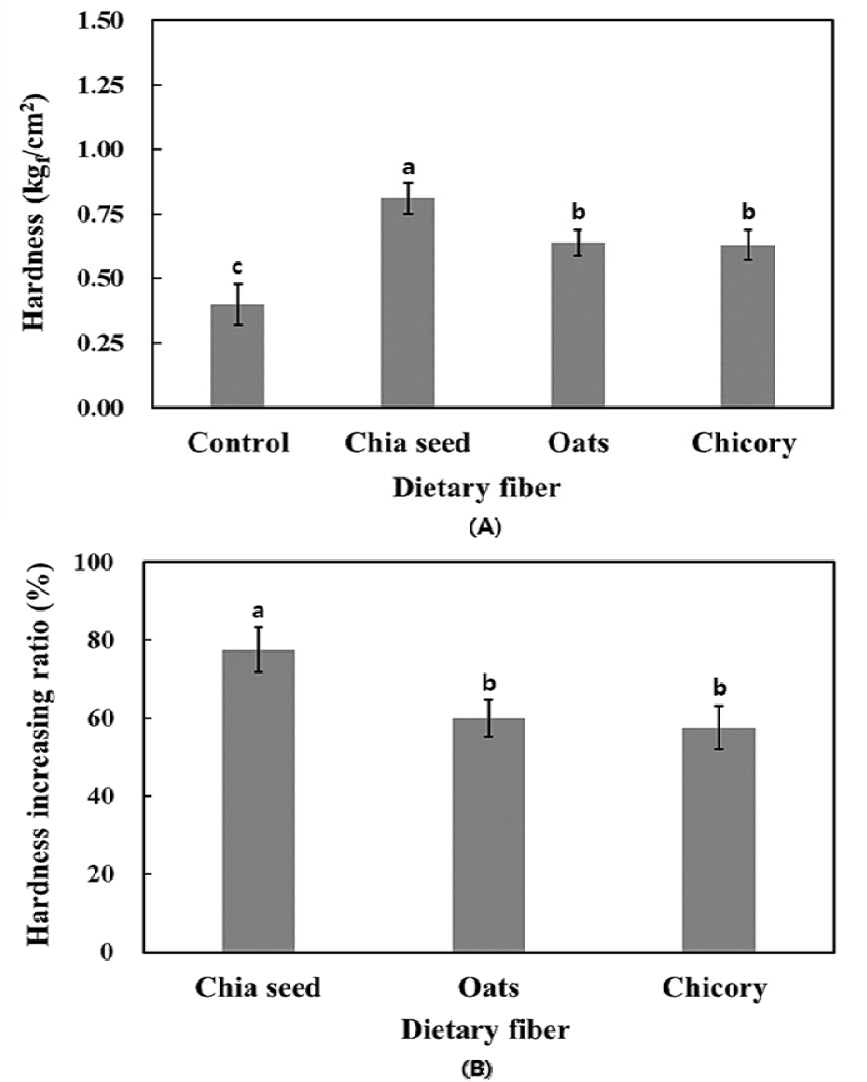
The pronounced hardening effect of chia seed fiber—which is composed primarily of cellulose, hemicellulose, pectin, and gums—is largely attributed to its substantial total fiber content (approximately 35%). It is hypothesized that soluble mucilage components may act as structural fillers within the muscle protein matrix and contribute to enhanced water retention and structural stability. However, the incorporation and distribution of mucilage components within the protein matrix require further verification through microscopic analyses such as SEM or CLSM, which will be addressed in future studies. This physical interaction minimizes the thermal degradation of myofibrillar proteins during the retort process. Furthermore, the exceptional moisture-retention capacity of chia seed fiber enhances the elasticity and cohesion of the final product. Its ability to sequester fat and improve emulsification stability also prevents lipid separation, a common factor in texture degradation during high-temperature processing (Cardoso et al., 2009; Wang et al., 2021).
Chicory dietary fiber, consisting primarily of inulin (a soluble fructose-based oligosaccharide), has been documented to interact with fish muscle protein structures, thereby maintaining tissue strength post-retorting. Similarly, oat dietary fiber is rich in β-glucan—a water-soluble polysaccharide characterized by β-(1,3) and β-(1,4) glycosidic bonds. The high water-holding capacity (WHC) of β-glucan contributes significantly to the maintenance of tissue integrity and structural resistance against thermal stress (Cardoso et al., 2009; Alvarez & Barbut, 2013).
The multifunctional complex mixture was designed based on the individual effects of each component. Chia seed fiber was selected due to its superior ability to improve tissue hardness, while citric acid and vinegar powder were incorporated as highly soluble and cost-effective organic acid sources. Rice starch was additionally included to minimize potential negative effects of organic acids on sensory properties and to improve the overall applicability of the formulation.
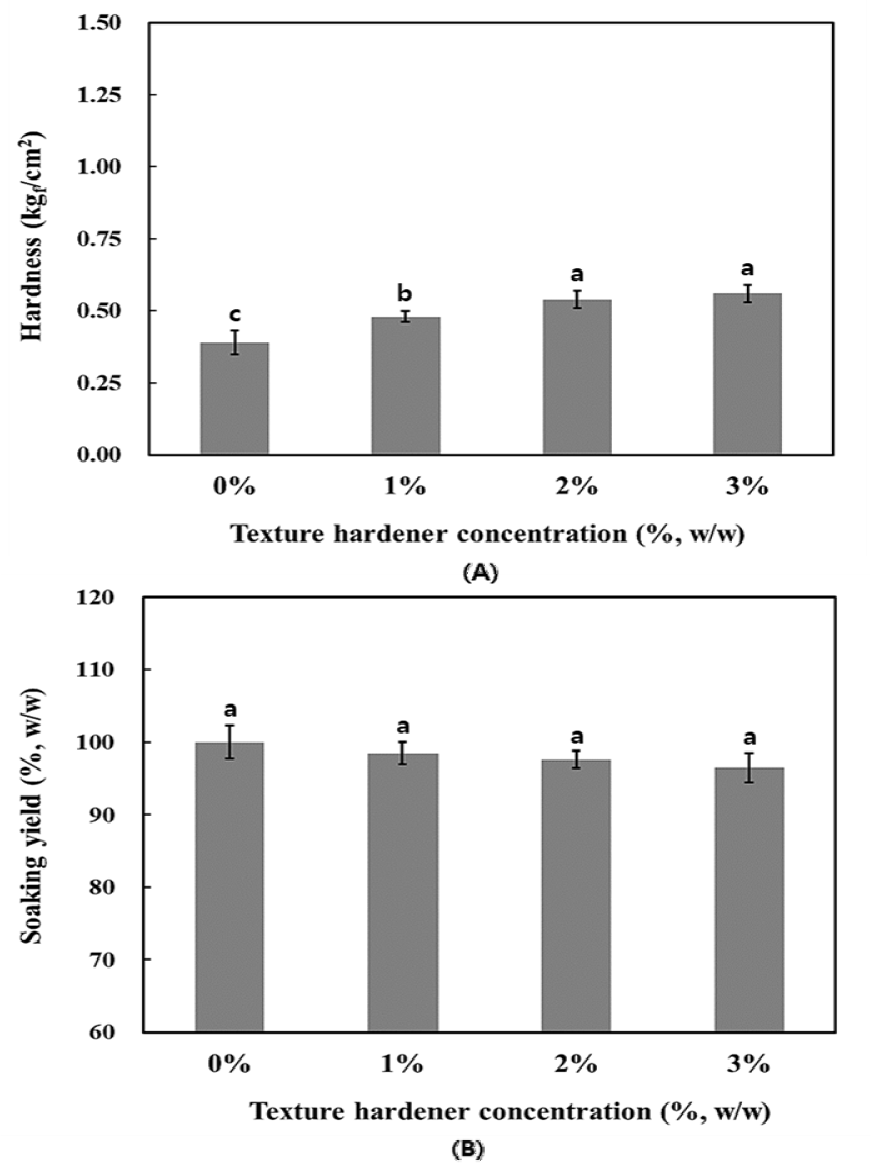
The hardening effects were evaluated at concentrations of 1, 2, and 3% (w/w) in an aqueous solution. At a 1% concentration, tissue hardness increased significantly (p<0.05) from 0.39 to 0.48 kgf/cm2 (Fig. 4). Further increases in concentration to 2% and 3% resulted in hardness values of 0.54 kgf/cm2 and 0.56 kgf/cm2, respectively (Fig. 4). Following immersion and standardized washing procedures, the total weight of the samples decreased slightly by approximately 1–3%, with no statistically significant differences observed between the treatment groups. Consequently, a concentration of 1–2% of the complex hardener was determined to be the optimal range for enhancing the textural integrity of retorted pollock. However, its effects on sensory quality should be evaluated in future studies.
To evaluate the combined efficacy of chemical and physical pretreatments on the texture of retorted fish, superheated steam (SHS) treatment at 400°C for 5 min was applied as an alternative to conventional water blanching following immersion in the tissue hardener. The experimental groups were categorized into hardener only, SHS only, and a combination of both treatments. Interestingly, the results revealed that SHS treatment alone was the most effective, yielding an approximately 46% increase in textural hardness post-retorting (Fig. 5). In contrast, the hardener-only and the combined treatment groups showed increases of 27% and 19%, respectively (Fig. 5). The reduced efficacy of the combined treatment was unexpected; it is hypothesized that the intense thermal energy of the SHS at 400°C potentially degraded the complex hardener’s components, thereby diminishing their ability to reinforce the texture of fish.
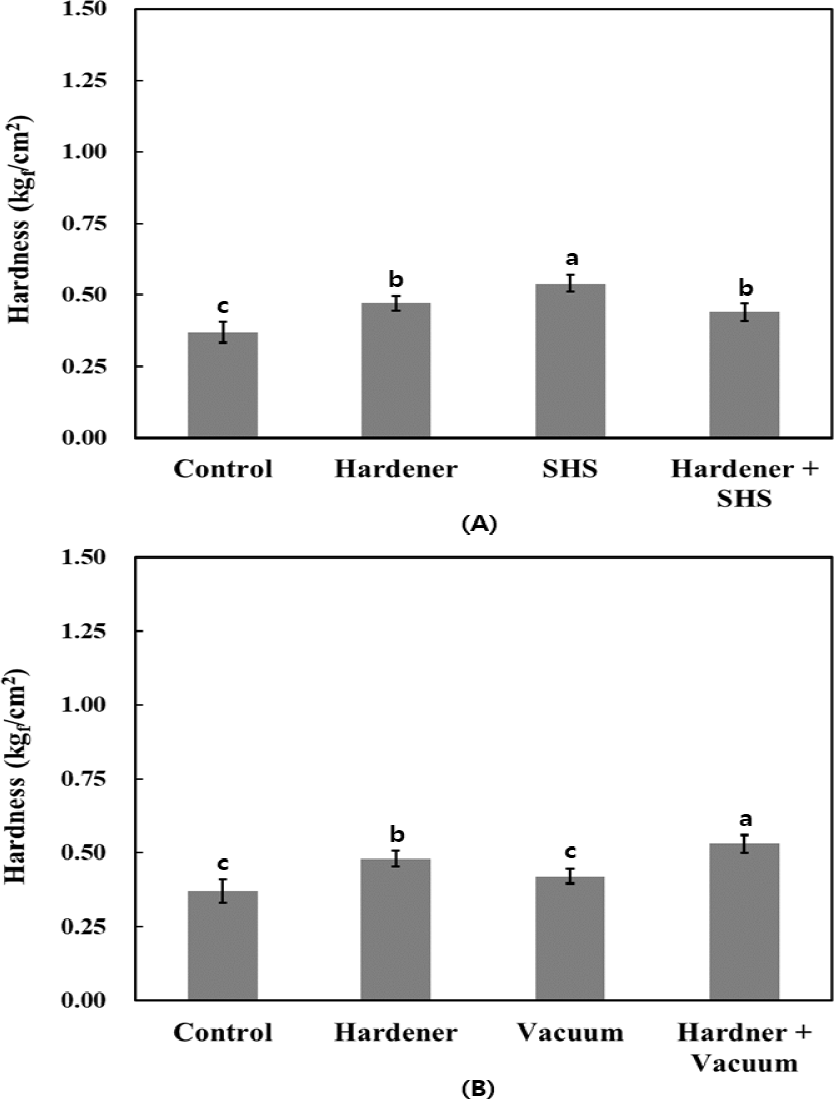
The primary mechanism by which SHS enhances the hardness of retorted pollock is associated with accelerated protein denaturation and coagulation. Direct exposure to the high heat flux of SHS facilitates more efficient heat transfer compared to conventional hot water blanching. This rapid thermal induction triggers immediate coagulation and solidification of muscle proteins, particularly on the surface, resulting in a denser and more resilient tissue matrix. Furthermore, the elevated temperature promotes controlled moisture evaporation, leading to localized tissue shrinkage that further contributes to the overall increase in hardness (Sehrawat et al., 2016; Tinagli et al., 2023).
The combined application of vacuum treatment and the complex hardener resulted in a synergistic improvement in the textural integrity of retorted pollock. Specifically, a 10 min vacuum treatment significantly increased (p<0.05) tissue hardness by approximately 43% compared with the untreated control after retort processing (Fig. 5). Furthermore, a 10% increase in pollock weight was observed, indicating enhanced uptake of the hardening agents into the pollock muscle. This textural reinforcement is primarily attributable to the vacuum-facilitated infiltration of the hardening agents into the interstitial voids of the myofibrillar protein matrix.
The underlying mechanism is driven by the maximization of the pressure differential and enhanced capillary action. Vacuum treatment effectively evacuates air and moisture from the microporous structures of the raw pollock tissue, significantly reducing internal pressure. This pressure gradient promotes the rapid and deep penetration of dietary fibers and organic acids into the muscle microstructure. Collectively, these findings indicate that vacuum treatment, when integrated with a complex tissue hardener, serves as a highly effective strategy for preserving the textural integrity of retorted fish products (Nian et al., 2019; Wan et al., 2019).
In contrast to the softening observed in fish muscle, retorted long arm octopus typically exhibits excessive toughness. This phenomenon is driven by the rapid release of intracellular juices and the hyper-contraction of myofibrillar proteins during high-temperature thermal processing. To mitigate this toughening, the application of alkaline tenderizing agents was investigated. Preliminary screenings of various alkaline components, including poly-, tri-, and meta-phosphates, revealed significant softening potential. Specifically, a 0.3% (w/w) calcined shell calcium solution was found to be the most effective, yielding a softening rate of approximately 30% in retorted samples (Fig. 6). In comparison, complex phosphates and sodium bicarbonate showed limited efficacy, with softening rates of approximately 10% (Fig. 6).
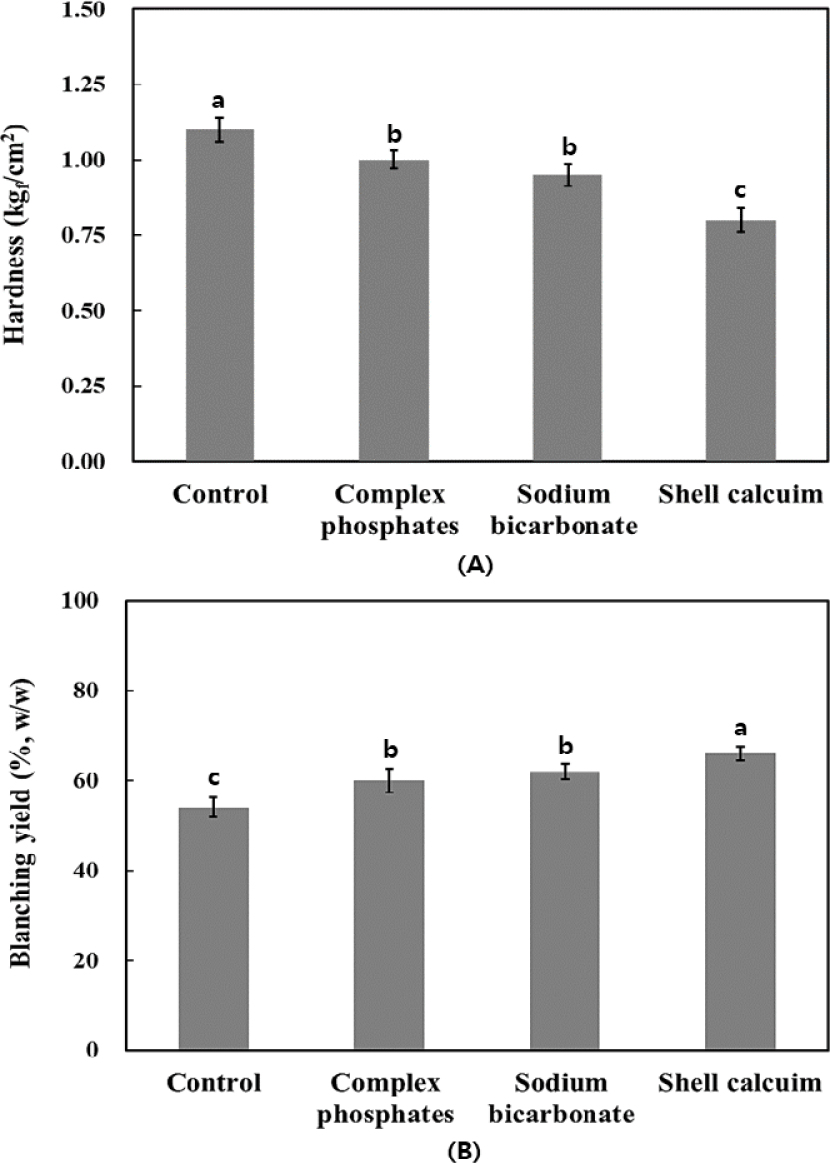
The primary mechanism for the softening effect of alkaline agents is the elevation of muscle pH, which promotes the relaxation and swelling of the myofibrillar architecture. The increased net negative surface charge on proteins such as actin and myosin enhances electrostatic repulsion between molecules. This repulsion disrupts tight intramolecular interactions, loosening the protein conformation and facilitating increased water immobilization. Consequently, the improved water-holding capacity (WHC) reduces tissue density after retorting, resulting in a more tender mouthfeel. Furthermore, the elevated pH environment compromises the structural stability of connective tissue proteins, particularly collagen, leading to partial solubilization and disintegration of the perimysium, which further contributes to the tenderizing effect (Chantarasuwan et al., 2011; Jiang et al., 2013).
The superior performance of calcined shell calcium is attributed to its dual functionality: the creation of a potent alkaline environment and the provision of exogenous calcium ions. While the alkalinity of calcined shell calcium drives protein swelling, and the calcium ions assist in stabilizing protein-membrane interfaces, preventing excessive structural deformation and maintaining a desirable level of elasticity. In contrast, complex phosphates function primarily by chelating endogenous divalent cations, thereby inhibiting their ability to form cross-links between proteins. This chelation increases the space available for water binding, thus amplifying the overall softening effect (Chantarasuwan et al., 2011; Jiang et al., 2014).
Conclusion
This study systematically evaluated physicochemical pretreatment strategies for controlling the opposite texture deterioration of seafood during retort processing. Organic acid- and dietary fiber-based pretreatments effectively improved the hardness of pollock, while superheated steam and vacuum pretreatments further enhanced structural stability. In contrast, alkaline calcined shell calcium effectively reduced the excessive toughening of long-arm octopus, indicating that texture-control strategies should be tailored to the thermal response of each seafood species. These findings suggest that combining chemical and physical pretreatments is a promising approach for improving the textural integrity of retorted seafood products. Although this study does not demonstrate direct industrial applicability, it provides a scientific basis for developing species specific pretreatment technologies and optimizing retort processing. This study has several limitations, as only instrumental hardness was evaluated. Future studies should include comprehensive Texture Profile Analysis (TPA), including springiness, cohesiveness, chewiness, gumminess, and resilience, together with sensory evaluation, storage stability, microstructural analysis, pilot-scale validation, and economic feasibility analysis to further verify the effectiveness and industrial applicability of the proposed pretreatment strategies.


