
 PDF Download
 PubReader
 Export Citation
 Email the Author
 Share Facebook
 Share Twitter
 Cited by 0 Article
 Metrics (View:1,059)








Introduction
Red pepper (Capsicum annuum L.), a perennial herb of the Solanaceae family, is widely consumed worldwide as both a spice and a nutritional source. In Korea, it plays a crucial role in kimchi, red pepper paste, and various seasonings, occupying an important place in the dietary life of Koreans (Hwang et al., 2011; Lim et al., 2012). Red peppers contain a diverse array of bioactive compounds, including carotenoids, capsaicinoids, vitamin C, and phenolic compounds, which are associated with anticancer, antiobesity, and cholesterol-lowering effects (Lim et al., 2012).
While fresh peppers are available, the majority are distributed in dried or powdered form. Consequently, the drying process plays a decisive role in determining the final quality and marketability of the product (Fowles et al., 2001). The quality of red pepper powder is determined by various factors, with visual appearance directly affecting consumer preference. The red pepper’s color coming from mixtures of diverse carotenoids such as capsanthin, capsorubin, β-carotene, β-cryptoxanthin, and zeaxanthin are known to be significantly affected by variety (Zhou et al., 2026), cultivation practices, environment, as well as by the post-harvest drying method (Hwang et al., 2011). Furthermore, capsaicin and dihydrocapsaicin not only define the pungency of the powder but also provide physiological benefits, including metabolic enhancement and pain management (Ludy et al., 2012; Ahn et al., 2022). Additionally, free sugars mainly contribute to sweetness, while phytonutrients such as tocopherols, phytosterols, and squalene offer various health-promoting effects (Bhandari et al., 2016; Choi et al., 2023; Hwang et al., 2023).
Traditionally, sun-dried red peppers known as "Taeyangcho" have been preferred for its deep color and rich flavor. However, the strong dependence of this method on weather conditions limits large-scale production and leads to variability in product quality. To overcome these limitations, heated-air drying has been widely applied; nevertheless, it often suffers from low energy efficiency and thermal degradation of quality attributes.
As an alternative, near-infrared drying (NIR) has attracted attention due to its rapid heating and potential for quality retention. Kim (2019) reported improved red pepper quality using a two-step process combining NIR with microwave treatment, where microwave irradiation enhanced volumetric heating and reduced surface hardening. However, whether standalone NIR drying can sufficiently heat the interior while minimizing surface contraction and maintaining color and nutrient stability remains to be clarified. Since NIR radiation operates at short wavelengths with relatively deep penetration into biological tissues, it may induce effective internal heat generation without supplementary microwave treatment. Therefore, this study evaluates a standalone NIR drying system by analyzing key quality attributes of red pepper, including fatty acid composition, capsaicinoids, and free sugars, to assess its feasibility as a simplified and energy-efficient drying approach.
Finally, this research aims to compare the phytochemical properties of red pepper powder as affected by different drying methods to identify the optimal processing conditions for high-quality red pepper powder production.
Materials and Methods
Red peppers (Capsicum annuum L.) of the cultivar ‘Meotjin Sanai’ (FarmHannong, South Korea) were cultivated according to the standard guidelines of the Rural Development Administration (RDA). After harvesting, the peppers were ripened in the shade for two days, washed twice with running water, and excessive surface moistures were removed by short exposure to room temperature in a shade. Three drying methods were applied: sun drying (SD), heated-air drying (HA), and near-infrared drying (NIR). Sun drying was conducted according to the traditional protocols in that the peppers were spread on a plastic mesh tray and exposed to sunlight for six days. Peppers on tray were turned over every day. As a standard protocol in farmlands, heated-air drying was performed using a heated-air dryer (Kunyoung Tech, HWA-08, South Korea) at 60°C for 48 hours, a method commonly used by farmers to produce high-quality red pepper powder. Near-infrared drying was carried out in a food dryer (Shinil Tech, PS-2000A, South Korea) for 48 hours at 51°C. Which is a slightly lower temperature and longer duration than the manufacturer’s protocol (55°C for 30 hours) for red pepper drying, to clarify the effects of Near-infrared drying.
One gram of red pepper powder was mixed with 10 mL of ethanol and extracted for 5 hours at room temperature using a tube rotator (DLAB Scientific Co., Ltd, China). After extraction, the mixture was centrifuged at 3,000 rpm for 5 minutes, and the supernatant was filtered through a 0.45 μm PTFE syringe filter (SmartPor® II, SPP4525-1, South Korea). Capsaicin and dihydrocapsaicin contents were determined by high-performance liquid chromatography (S3250, Sykam GmbH, Germany equipped with a UV detector and a Sunniest C18 column (150×4.6 mm, Japan). Mobile phase was a 50:50 (v/v) mixture of acetonitrile and 1% aqueous acetic acid, and the flow rate was maintained at 1.2 mL/min. Detector was set λ=280 nm, and the injection volume was 20 μL. Authentic standards of capsaicin and dihydrocapsaicin were purchased from Sigma (USA).
A total of 0.5 g of red pepper powder was mixed with 20 mL of distilled water and vortexed for 1 minute. Sugars were extracted using a tube rotator (DLAB Scientific Co., Ltd, China) for 10 minutes, followed by centrifugation at 3,000 rpm for 5 minutes. The supernatant was then filtered through a 0.45 μm PTFE syringe filter (SmartPor® II, SPP4525-1, South Korea), and the filtrate was analyzed using high-performance liquid chromatography (HPLC) equipped with an evaporative light scattering detector (ELSD, 3300, Alltech, USA) and a Kromasil 60-5-HPLC-D column (4.6×250 mm, Sweden). Under isocratic conditions, the mobile phase consisted of 80% acetonitrile and 20% distilled water with a flow rate maintained at 1.2 mL/min, and the injection volume was 20 μL. The ELSD drift tube temperature was maintained at 55°C, and nitrogen gas was used as carrier gas at a flow rate of 3.0 L/min. Glucose, fructose, and sucrose standards were purchased from Merck Korea (Seoul, Republic of Korea).
A total of 0.2 g of red pepper powder was added to a 1.5 mL amber vial containing 680 μL of a one-step extraction-methylation mixture (methanol: benzene: 2,2-dimethoxypropane: sulfuric acid= 39:20:5:2, v/v) and 400 μL of heptane. The vial was tightly sealed and incubated in a water bath at 80°C for 2 hours for simultaneous extraction and methylation. After centrifuged at 1,000 rpm for 1 minute, the upper heptane layer was collected and injected into a gas chromatography (GC) with a flame ionization detector (FID) (GC-2010 Plus, Shimadzu, Japan). The GC analysis was performed using a DB-5 capillary column (30 m×0.25 mm ID; Agilent, USA). The oven temperature was initially set at 150°C and held for 2 minutes, then increased to 215°C at a rate of 4°C/min and maintained for 25 minutes. The injector and FID detector temperatures were both set at 240°C. Nitrogen gas (99.99% purity) was used as the carrier gas at a constant flow rate of 3.17 mL/min, with a split ratio of 1:20. For fatty acid methyl ester identification, the retention times of each peak were compared with those of 37 authentic FAME standards (Supelco, USA). The composition of each fatty acid was expressed as the percentage of its peak area relative to the total peak area of all identified fatty acids.
Powdered red pepper (2.0 g) was placed in a 50 mL centrifuge tube, mixed with 20 mL of ethanol and 0.1 g of ascorbic acid, and subjected to extraction in a water bath at 80°C with shaking at 160 rpm for 10 min. Subsequently, 300 μL of saturated KOH solution was added for saponification and the mixture was incubated under the same conditions for an additional 18 min and then cooled in ice beads. For liquid–liquid extraction, 10 mL of hexane and 10 mL of distilled water were added to the cooled sample, vigorously vortexed, and centrifuged at 3,000 rpm for 5 min at 4°C. The upper hexane layer was collected. The extraction was repeated twice more with an additional 10 mL of hexane each time. The combined organic layers were washed three times with 10 mL of distilled water and passed through anhydrous sodium sulfate to remove residual moisture. The filtered organic layer was concentrated under a reduced pressure at 37°C using a rotary evaporator and re-dissolved in 2 mL of isooctane. The analysis was carried out using a gas chromatography equipped with a flame ionization detector (GC-2010 Plus, Shimadzu, Japan). The GC analysis was performed using a DB-5 MS capillary column (30 m×0.25 mm ID; Agilent, USA). The oven temperature was initially held at 250°C for 2 minutes, then increased to 281°C at a rate of 4°C/min and maintained for 30 min, then increased to 315°C at a rate of 10°C/min. The inlet and flame ionization detector (FID) temperatures were both set at 290°C. Nitrogen gas (99.99% purity) was used as the carrier gas at a constant flow rate of 0.41 mL/min, with a split ratio of 1:20. Authentic standards for α-tocopherol (α-T) and γ-tocopherol (γ-T) were obtained from Abcam (U.K.). Standards for squalene, campesterol, and stigmasterol were purchased from Sigma (USA), while the standard for sitosterol was obtained from EPRS (European Pharmacopoeia Reference Standards).
Red pepper powder (2.0 g) was extracted with 100 mL of acetone in a volumetric flask wrapped with aluminum foil to prevent light exposure. The mixture was left at room temperature for 16 hours. The absorbance of the extract was then measured at 460 nm using a UV–Vis spectrophotometer (Libra S22, Biochrom, UK). The ASTA value was determined according to the AOAC Official Method 971.26 (AOAC, 1990) and calculated using the following formula:
Results
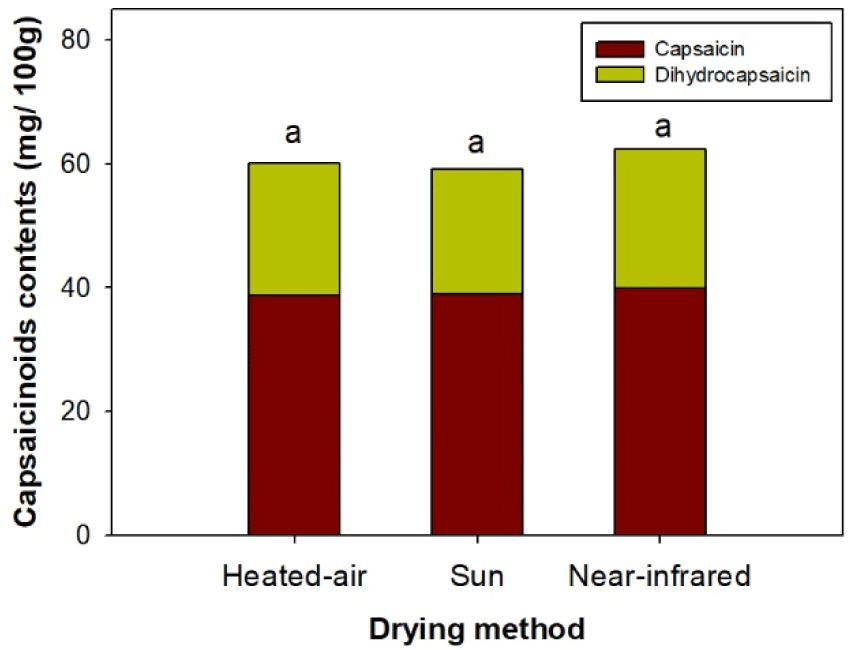
Pungency is a defining quality trait of red pepper powder, primarily attributed to capsaicin and dihydrocapsaicin, collectively known as capsaicinoids (Lim et al., 2012). As shown in Fig. 1, the capsaicin content was 38.81 mg/100 g in the HA sample, 38.89 mg/100 g in the SD sample, and 39.94 mg/100 g in the NIR sample. Dihydrocapsaicin contents were 21.34, 20.27, and 22.37 mg/100 g in the HA, SD, and NIR samples, respectively. Accordingly, total capsaicinoid content was 60.15 mg/100 g in the HA sample, 59.16 mg/100 g in the SD sample, and 62.32 mg/100 g in NIR sample, with no statistically significant differences observed among the three drying methods (p<0.05).
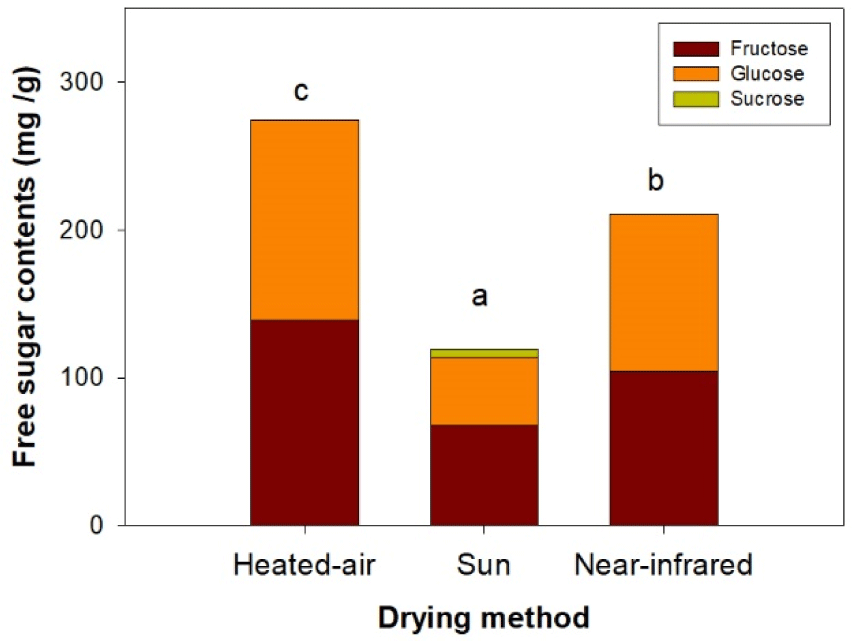
Drying methods significantly influenced both the concentration and composition of free sugars (Fig. 2). The highest total free sugar was observed in HA (273.90 mg/g), followed by NIR (210.72 mg/g) and SD (118.96 mg/g). Glucose and fructose ranged from 46.18 to 135.13 mg/g and 67.68 to 138.78 mg/g, respectively, with HA yielding the highest levels of both glucose (135.13 mg/g) and fructose (138.78 mg/g). Sucrose was detected only in SD samples (5.12 mg/g). All sugars components showed significant variations depending on the drying methods.
The fatty acids composition of red pepper powder exhibited significant variation depending on the drying method (Table 1). Total saturated fatty acids (SFA) were higher in HA (23.14%) and NIR (20.92%) compared to sun drying (15.89%). Palmitic acid (C16:0), the predominant SFA, was significantly lower in SD red pepper powder (0.07%) than in heated-air drying (0.08%) and near-infrared drying (0.09%).
Regarding monounsaturated fatty acids (MUFA), SD resulted in the highest composition (25.07%), followed by NIR (10.34%) and HA (6.45%). Oleic acid (C18:1), a key MUFA, was also significantly lower in the HA red pepper powder (5.45%) compared to both SD (9.14%) and NIR (9.32%). Polyunsaturated fatty acids (PUFA) were generally highest in SD (64.96%) and lowest in NIR (59.89%). Among PUFA, linoleic acid (C18:2) was the most abundant across all treatments, with the highest composition observed in SD (56.01%), and the differences among treatments were statistically significant. Linolenic acid (C18:3) increased with the drying method, from 8.81% in SD to 12.43% in NIR and 14.50% in HA.
The contents of tocopherols, phytosterols, and squalene were summarized in Table 2. α-Tocopherol, β-tocopherol, and γ-tocopherol ranged from 13.70–18.90 mg/100 g, 0.29–0.50 mg/100 g, and 2.69–3.97 mg/100 g, respectively. For α-tocopherol, no statistically significant difference was observed between the NIR and HA groups, and both groups showed significantly higher contents compared to the SD. For β-tocopherol, no significant difference was found between the HA and SD groups, and both groups showed significantly higher contents compared to the NIR group. In the case of γ-tocopherol, the HA group showed a significantly higher content compared to both the NIR and SD groups, while there was no significant difference between the NIR and SD groups. Total tocopherol content did not differ significantly between the HA and NIR groups, but both were significantly higher compared to the SD group.
The contents of campesterol, sitosterol, and stigmasterol ranged from 4.37–4.56 mg/100 g, 18.73–19.96 mg/100 g, and 3.66–3.89 mg/100 g, respectively. None of the three phytosterols showed statistically significant differences among the drying methods, and therefore, total phytosterol content also did not show significant differences according to the drying method.
The content of squalene ranged from 1.19 to 1.35 mg/100 g. There was no statistically significant difference between the SD and HA groups, but the NIR group showed a significantly lower content compared to the other two groups.
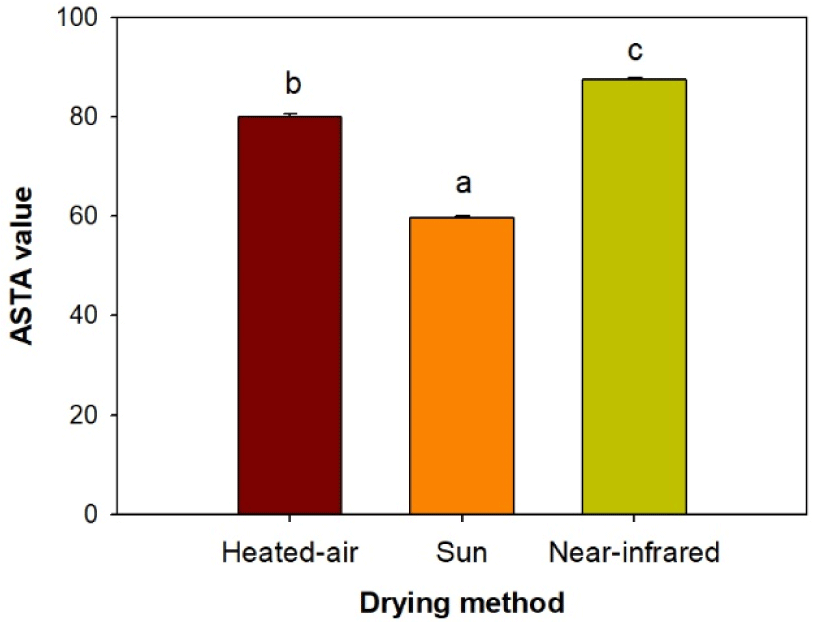
ASTA color values were markedly affected by drying conditions (Fig. 3). NIR resulted in the highest ASTA value (87.58±0.28), followed by HA (80.03±0.50), and SD (59.59±0.39). Significant differences (p<0.05) were found among the three drying methods, confirming that drying conditions markedly affect red pepper color.
Discussion
Red pepper powder is a key ingredient in Korean cuisine, and its quality is strongly influenced by the drying process. Because drying method differs in heat transfer, drying rate, and exposure to air and light, the final product, dried red pepper, can vary substantially in its physicochemical and phytonutrient properties. Therefore, a comparative evaluation of drying methods is essential for identifying optimal processing conditions that preserve both quality and commercial value of red pepper powder. The present study investigated how three different drying methods—sun drying (SD), heated-air drying (HA), and near-infrared drying (NIR)—affect the major quality attributes of red pepper powder.
No statistical differences in capsaicinoids (capsaicin and dihydrocapsaicin) contents were observed among drying methods, which was consistent with Lim et al. (2012). Furthermore, Bae et al. (1991) reported that capsaicin remains relatively stable even at high drying temperatures and is not substantially affected by temperature fluctuations during thermal processing. These results indicate that capsaicinoids are relatively stable compounds with minimal loss of content under different drying conditions, and the choice of drying method may therefore not be a critical factor in pungency of red pepper powder.
Free sugars (glucose, fructose, and sucrose) exhibited statistically significant differences depending on drying methods. Glucose and fructose showed the highest levels in the HA method with the shortest drying time, while the lowest levels were found in the SD method with the longest drying time. However, it remains unclear whether elevated temperature or prolonged drying duration plays a more dominant role. Sucrose was detected only in trace amounts in the SD group, but its contribution to the total free sugar content was negligible. This pattern might possibly be attributed to the hydrolysis of sucrose into glucose and fructose under the higher-temperature conditions of HA and NIR drying. As reported by Ding et al. (2017), sucrose can undergo acid-catalyzed hydrolysis at elevated temperatures, which contributes to the loss during high-temperature drying treatments. In contrast, the relatively low temperatures maintained during SD may have helped preserve a small amount of sucrose, possibly by limiting heat-induced hydrolysis. Overall, total sugar content decreased with increasing drying time, which is consistent with Jo and Shin (2018), who concluded that longer drying durations result in greater losses of total sugars. These results suggest that longer drying durations may promote the loss of free sugars through degradation reactions, and HA, with its relatively short drying time, may be preserving free sugar, resulting in higher sweetness and commercial priority of red pepper powder.
The differences in fatty acid composition among drying methods suggest that lipid stability in red pepper powder is strongly affected by drying temperature and heating intensity. Sun drying resulted in lower SFA and higher MUFA and PUFA contents, likely due to the relatively mild thermal conditions, which may reduce heat-induced degradation of unsaturated fatty acids. In contrast, HA showed increased SFA and decreased MUFA and PUFA levels, which may suggest preferential oxidation or degradation of unsaturated fatty acids. NIR exhibited intermediate characteristics between SD and HA, indicating that differences in energy transfer and localized heating patterns, may influence the stability of unsaturated fatty acids. These results are consistent with previous reports on the influence of drying methods on lipid stability (Jo & Shin, 2018). Further studies are needed to clarify how drying energy, temperature gradients, and time interact to affect the stability and subsequent changes in fatty acid composition of red pepper powder.
The effects of drying methods on the contents of lipophilic phytonutrients, including tocopherols, phytosterols, and squalene, were analyzed. Tocopherols, phytosterols, and squalene are major lipophilic bioactive compounds and have been reported to exhibit various physiological functions, including anti-inflammatory, anticancer, and cholesterol-lowering activities (Bhandari et al., 2016). Tocopherols are representative lipophilic antioxidants that protect cell membranes from oxidative damage and are known to contribute to the prevention of cancer and cardiovascular diseases (Lee et al., 2020). Owing to these functional properties, the retention of tocopherols during food processing and drying is considered an important factor in determining the functional quality of the final product. In the present study, α-tocopherol was the most abundant tocopherol, while β-tocopherol and γ-tocopherol were present at relatively lower levels, which is consistent with previous reports (Lee et al., 2020). No statistically significant difference in total tocopherol content was observed between the HA and NIR groups; however, both drying methods resulted in significantly higher tocopherol contents compared to SD peppers. This indicates that heat-based drying methods may help suppress the loss of tocopherols. In particular, HA and NIR expose samples to shorter oxidation periods than SD, and factors such as faster drying rate, stable and uniform temperature, reduced light exposure, and rapid decrease in water activity are presumed to have contributed to the inhibition of tocopherol oxidation, though these mechanisms were not directly verified in the present study.
Phytosterols are triterpene-based compounds naturally synthesized in plants and have attracted attention as functional bioactive components due to their ability to inhibit intestinal cholesterol absorption, lower blood cholesterol levels, and exert immunemodulating and anti-inflammatory effects (Hwang et al., 2023). No statistically significant differences were observed among drying methods for campesterol, sitosterol, or stigmasterol. This suggests that phytosterols have relatively stable structures and are not substantially degraded or lost during the drying process. In this study, all three phytosterols showed similar contents across drying methods, and consequently, total phytosterol content also did not differ significantly. These findings indicate that drying methods have only a limited effect on phytosterol content, confirming that phytosterols exhibit high stability as functional compounds. In the case of squalene, NIR exhibited significantly lower levels, while no statistically significant differences were found between the SD and HA groups, which maintained relatively higher levels than NIR.
The red color of peppers is due to the accumulation of carotenoids, which rapidly increases during the ripening process and is known to increase further during the postharvest drying process (Mínguez-Mosquera et al., 2000). Heated-air drying is widely used because it can significantly shorten drying time and improve production efficiency. However, previous studies have reported that HA may induce changes in color- and flavor-determining compounds, such as capsanthin and capsaicin, resulting in deterioration of red pepper quality (Kim & Ahn, 1998). In particular, when drying is conducted at elevated temperatures, ASTA color values—a standard index for red pepper color intensity defined by the American Spice Trade Association—have been reported to decrease. Conversely, drying under relatively low-temperature conditions has been shown to reduce the formation of browning substances, allowing the production of dried red peppers with superior color compared to high-temperature short-term drying (Lim et al., 2006; Hong et al., 2023). Kim & Chun (1975) reported that red pepper powder dried at a lower temperature below 55°C exhibited higher redness compared to conventional high temperature HA drying. In this study, HA resulted in higher ASTA color values than sun drying, which is likely attributable to the relatively shorter drying time and the more stable control of temperature conditions during the drying process. Near-infrared drying yielded the highest ASTA color value while being performed at a lower temperature with the same drying time as HA. These findings suggest that the preservation of carotenoid pigments is influenced not only by drying conditions such as temperature and time, but also by differences in energy transfer mechanisms associated with the drying method. While HA primarily relies on convective external heating, NIR enables more selective and efficient energy transfer through radiant heating, which is hypothesized to suppress surface overheating and possibly reduce the thermal degradation of carotenoid pigments, although carotenoid degradation pathways were not directly assessed. Therefore, the combined effects of differences in drying mechanisms and lower drying temperature may contribute to the superior ASTA color values observed in NIR, though further investigation is needed to confirm these mechanisms.
This study demonstrates that drying is not merely a moisture removal step but a key factor affecting physicochemical properties and the retention of color and functional compounds in red pepper powder. Capsaicinoids and phytosterols remained stable across all methods. Heated-air drying preserved free sugars, saturated fatty acids, tocopherols, and color (ASTA value). Sun drying favored unsaturated fatty acids but was less effective in preserving other components. These results highlight the importance of selecting drying conditions based on the intended application and support the need for optimized drying strategies to maintain product quality during large-scale processing.


