

Introduction
Growing concerns over environmental sustainability, animal welfare, and food security have accelerated the development of plant-based alternatives in the global food industry (Dekkers et al., 2018; Andreani et al., 2023; Pradhan et al., 2026). Initially, the development of meat alternatives primarily focused on replicating the fibrous structure of animal muscle proteins (Dekkers et al., 2018). However, as consumer expectations for the sensory quality of plant-based foods continue to increase (Giacalone et al., 2022), the demand has expanded beyond meat substitutes to a wider range of fat-rich products (Short et al., 2021; Munialo & Vriesekoop, 2023). In both conventional and plant-based food systems, fat is a key determinant of palatability, contributing to juiciness and mouthfeel while serving as a matrix for the retention and release of flavor compounds (Wood et al., 2004; McClements & Grossmann, 2021). To reproduce the solid texture of animal adipose tissue, the plant-based food industry has primarily relied on tropical oils such as coconut and palm oils (Bohrer, 2019). Despite their widespread use, these oils present several limitations. Their high saturated fatty acid content conflicts with the nutritional expectations of many consumers choosing plant-based diets and may increase cardiovascular health risks (Sacks et al., 2017; Neelakantan et al., 2020). In addition, large-scale cultivation of coconut and palm oils has been associated with tropical deforestation and biodiversity loss (Meijaard et al., 2020). From a technological perspective, these conventional tropical oils exhibit low melting points, often leading to premature melting and severe lipid exudation during cooking (Wi et al., 2020; Li et al., 2025). These limitations highlight the need for plant-based fat analogs that provide improved nutritional quality, sustainability, high thermal stability and desirable sensory properties (Li et al., 2025).
Oil-in-water (O/W) emulsion gels have attracted considerable attention as a promising strategy for developing plant-based fat analogs (McClements & Grossmann, 2021; Huang et al., 2025). By forming a continuous gel matrix using plant-derived starches and hydrocolloids, these systems can reduce saturated fat content while providing the solid-like texture and thermal stability required to mimic animal fat during processing and consumption (McClements & Grossmann, 2021; Zhang & Zhang, 2026). In particular, starches and wheat gluten are highly promising candidates for constructing the continuous phase. Starches (such as tapioca and potato) can form a rigid, highly elastic network through gelatinization, providing essential structural integrity and shape retention to the fat analog at room temperature (Singh et al., 2003). Meanwhile, gluten provides a unique viscoelastic protein network that undergoes heat-induced cross-linking, which is highly advantageous for resisting structural collapse and retaining oil at elevated temperatures (Alves & Tavares, 2019; He et al., 2025).
In this study, a plant-based fat analog was developed using an O/W emulsion gel system based on gluten and starch matrices to improve both flavor replication and thermal stability. The lipid phase was first optimized to reproduce the volatile flavor release profile of animal fat using Solid-Phase Microextraction Gas Chromatography-Mass Spectrometry (SPME-GC/MS). The optimized lipid was then incorporated into the biopolymer-based emulsion gel system. The formulation was specifically engineered to achieve rheological properties, particularly the storage modulus (G’) and thermal stability, comparable to those of porcine back fat. Finally, the practical efficacy of the developed emulsion gel was validated in actual plant-based meat patty models to confirm its superior oil retention capacity under simulated cooking conditions. This approach provides a plant-based fat platform with improved flavor release and structural stability, making it highly applicable for advanced plant-based meat alternatives that require sustained juiciness and improved mouthfeel.
Materials and Methods
Vital wheat gluten, tapioca starch, and potato starch were purchased from a local market. Soy protein isolate (SPI) and xanthan gum were obtained from Gwangil (Seoul, Korea). The transglutaminase (ACTIVA-TG-K, 100 U/g) used in this study was purchased from Ajinomoto Co., Inc. (Tokyo, Japan). A total of 18 commercial plant oils (soybean, perilla, peanut, almond, avocado, corn, olive, sesame, canola, grape seed, pistachio, sunflower, rice bran, walnut, safflower, camellia, coconut, and palm) were obtained from a local market.
Volatile compounds were extracted and analyzed using SPME-GC/MS. Briefly, 2.0 g of the sample was placed in a 20 mL vial and pre-equilibrated at 60˚C for 15 min. A 50/30 μm DVB/ CAR/PDMS fiber (Supelco Co., Bellefonte, PA, USA) was exposed to the headspace for 30 min at 60˚C. The extracted volatiles were thermally desorbed at 250˚C for 5 min in the injection port of a GC-MS system (7890B–5977B, Agilent Technologies, Santa Clara, CA, USA) equipped with a DB-WAX capillary column (30 m×0.25 mm, 0.25 μm). Helium was used as the carrier gas at 1.0 mL/min. The oven temperature was initially held at 40˚C for 3 min, increased to 220˚C at 5˚C/min, and maintained for 5 min. Mass spectra were acquired in electron impact mode (70 eV) scanning from m/z (35 to 350). Compounds were identified by comparing their mass spectra with the NIST 14 library and further confirmed using retention index calculated from n-alkanes (C7–C30).
To represent the characteristic aroma of the target animal fats, the ten dominant volatile compounds were selected based on their relative peak areas (Area %) from the SPME-GC/MS chromatograms. A constrained optimization algorithm was executed via Microsoft Excel Solver using these relative areas as weighting factors. The objective function was programmed to maximize the Pearson correlation coefficient (r) between the target animal fat volatile vector and the predicted plant oil blend vector, ensuring non-negative blending fractions summing strictly to 100%.
The base emulsion was prepared using two step homogenization processes. First, 55 g of plant oil and 45 g of an aqueous soy protein isolate solution (7.5% w/w) were mixed using a high speed homogenizer (ULC-HM30, UL Chemical, Daegu,K orea) at 12,000 rpm for 2 minutes to produce a coarse emulsion. This coarse mixture was then processed through a high pressure homogenizer (NH500, ILSHIN Autoclave, Daejeon, Korea) at 550 bar to create a uniform and highly stable fine emulsion.
Following this homogenization process, two types of emulsion gels, namely a gluten-based emulsion gel (GEG) and a starch-based emulsion gel (SEG), were prepared by incorporating different structuring components into 100 g of the base emulsion. The specific addition levels of vital wheat gluten, starches, and xanthan gum were determined based on preliminary optimization trials to prevent phase separation and mimic the texture of animal fat. The final composition (weight %, w/w) of all components in both GEG and SEG is summarized in Table 1. For the GEG formulation, the mixture was first incubated at 50˚C for 2 h to promote transglutaminase-mediated protein cross-linking, followed by heating at 95˚C for 10 min to inactivate the enzyme and complete gelation. For the SEG, the mixture was heated at 95˚C for 20 min to induce complete gelation and structural formation. All samples were then cooled to room temperature prior to further analysis.
The macroscopic appearance of the emulsion gels (GEG and SEG) and pork back fat (PBF) was evaluated using digital image analysis. Photographic images of the samples were uniformly captured under controlled lighting conditions to prevent color distortion and shadowing. The captured images were then analyzed using ImageJ software (National Institutes of Health, Bethesda, MD, USA). For quantitative colorimetric analysis, a standardized region of interest (ROI) was selected from each sample image to extract the mean RGB (Red, Green, Blue) values, which were subsequently converted into CIELAB color space coordinates (L*, a*, and b*).
The dynamic viscoelastic properties of the formulated O/W emulsion gels (GEG and SEG) and PBF were evaluated using a rotational rheometer (Discovery HR-30, TA Instruments, New Castle, DE, USA) equipped with a 20 mm parallel plate. To investigate the thermal stability, dynamic temperature sweep tests were conducted from 25 to 65˚C at a heating rate of 3˚C/min. Measurements were performed at a constant frequency of 1 Hz and a strain amplitude of 0.5% (within the linear viscoelastic region). The G’, loss modulus (G’’), and loss tangent (tan δ) were recorded as a function of temperature.
Meat patty models were prepared to evaluate the thermal stability and physical behavior of the lipid sources during cooking. Lean pork meat was ground and mixed with one of three lipid sources: control (PBF), coconut oil, and GEG at a 70:30 (w/w) ratio. The exact formulation is detailed in Table 2.
| Ingredients (%) | Control | Coconut oil | Emulsion gel |
|---|---|---|---|
| Lean pork meat | 70 | 70 | 70 |
| Pork back fat (PBF) | 30 | - | - |
| Coconut oil | - | 30 | - |
| Gluten-based emulsion gel (GEG) | - | - | 30 |
| Total | 100 | 100 | 100 |
Additional binders, salts, or seasonings were excluded from the binary mixture to isolate the physical effects of the fat analogs. The 70:30 mixtures were shaped into uniform patties (25 g, 50 mm diameter). The formed patties were cooked in an oven at 180˚C for 20 min. The structural behavior and exterior appearance were visually monitored before and after cooking.
The weight measurement for the cooked patties was performed in triplicate, and the data are expressed as the mean±standard deviation. Statistical differences among the samples were analyzed using a one-way analysis of variance (ANOVA) followed by Duncan’s multiple range test (p<0.05) using SPSS software (Version 26.0, IBM, Chicago, IL, USA).
Results and Discussion
Flavor remains one of the most critical hurdles in developing realistic meat alternatives (Fiorentini et al., 2020). To address this, the volatile profiles of 18 commercial plant oils, porcine back fat, and beef tallow were analyzed using SPME-GC/MS (Table 3) to establish baseline volatile profiles for the subsequent computational blending algorithm.
While several plant oils exhibited overlapping flavor notes, no single oil could fully capture the aromatic complexity of authentic lard or tallow, showing low individual Pearson r, with ranges of –0.36 to 0.24 for lard and –0.32 to 0.48 for beef tallow (Table 3). By setting the top 10 dominant volatile compounds of the animal fats as strict baselines using their Area % as weighting factors, a computational algorithm was utilized to pinpoint the exact blending ratios that would maximize the r between the plant based mixtures and their animal counterparts.
This approach identified a 53:34:13 combination of perilla, sunflower, and peanut oils as the most effective lard analog, designated as Optimal Blend 1. In this blend, sunflower oil established a neutral and fatty base (Bendini et al., 2011), while peanut oil delivered essential meaty richness likely driven by its aldehyde and pyrazine profiles (Fiorentini et al., 2020). Perilla oil filled the remaining aromatic gaps by synergistically compensating for the high levels of trans,trans-2,4-decadienal, which imparts a deep-fried flavor, and 2-n-pentylfuran, known for its earthy and beany aromas, that are highly characteristic of actual lard (Ran et al., 2020). For beef tallow, a 73:27 ratio of pistachio and peanut oils emerged as the best fit, designated as Optimal Blend 2. Here, the volatile composition of pistachio oil interacted with peanut oil to reproduce the balance of key aliphatic volatiles, including n-nonanal and n-hexanoic acid, which contribute to the characteristic aroma of beef tallow (Song et al., 2022). As visualized in the radar charts (Fig. 1), both Optimal Blend 1 and 2 closely traced the overall flavor release patterns of actual lard and tallow, achieving high correlation scores (r=0.855 and r=0.832, respectively).
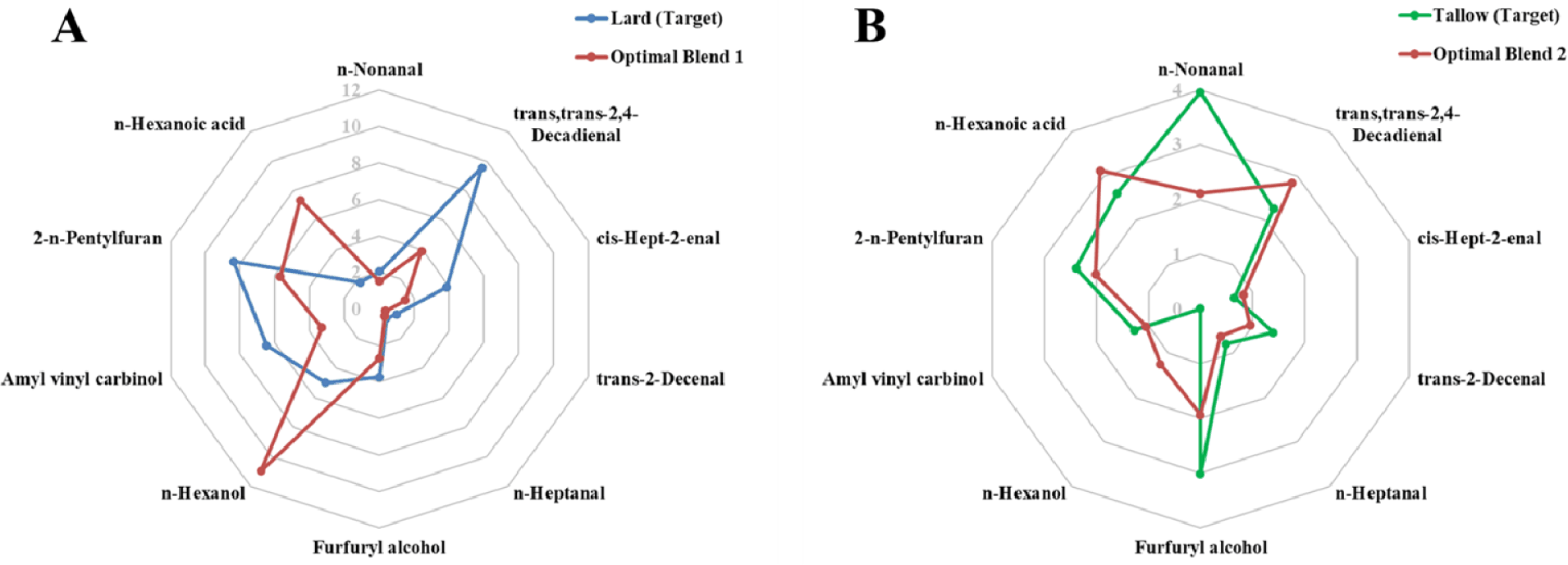
While accurate aromatic blends were formulated for both animal fats, the subsequent rheological phase focused exclusively on structurally mimicking PBF. Porcine subcutaneous fat is widely utilized in the meat industry due to its versatility in minced products. Unlike beef tallow, which often behaves as an unstructured intramuscular lipid (marbling), PBF features a highly resilient connective tissue matrix where fat cells are tightly compartmentalized (Jiménez-Colmenero, 2007). This architecture provides the solid-like integrity and cohesive bite essential for realistic meat alternatives. Consequently, Optimal Blend 1 was selected as the internal lipid phase for the emulsion gels to deliver authentic flavor alongside the physical properties of PBF.
The emulsion gels (GEG and SEG) mimicked the solid-like appearance of actual PBF (Fig. 2), which was supported by colorimetric analysis.
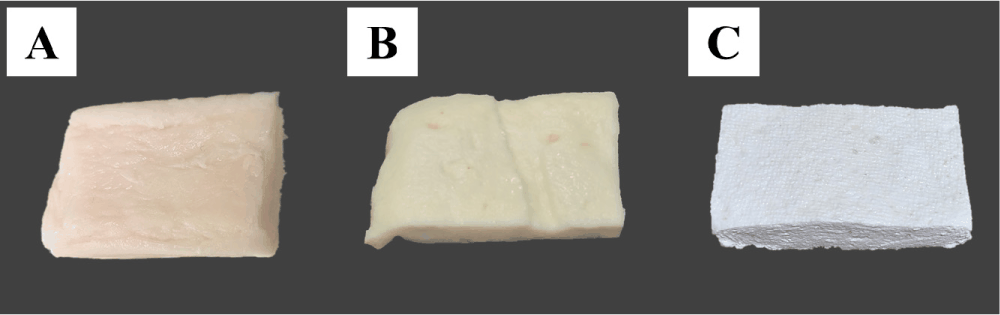
The PBF (Fig. 2A) displayed a natural off-white appearance with slight redness and yellowness (L*=81.6, a*=4.4, b*=13.0), reflecting the trace presence of myoglobin and natural animal lipids (Sen et al., 2014). GEG (Fig. 2B) presented a creamy, yellowish appearance. While its lightness (L*=82.3) was comparable to PBF, it exhibited a negative a* value (–2.3) and high yellowness (b*=13.8), typical of plant-based oils and pigments of vital wheat gluten. SEG (Fig. 2C) exhibited an intensely opaque, white appearance with the highest lightness (L*=85.4) and a negative b* value (–4.2), attributable to the refined tapioca and potato starches. Despite these color variations, both systems effectively encapsulated the liquid oil blend and replicated the macroscopic solid-fat characteristics of PBF without structural collapse.
To investigate structural stability under thermal stress, dynamic oscillatory temperature sweeps were conducted (Fig. 3). At room temperature (25˚C), all matrices exhibited predominantly elastic behavior (G’>G’’) (Youssef & Barbut, 2009; Dickinson, 2012). Notably, SEG demonstrated a higher initial stiffness (G’=1.94×10⁴ Pa) compared to GEG (1.22×10⁴ Pa). The initial G’ of GEG was virtually identical to that of PBF (1.20×10˚C Pa). This confirms that both formulated biopolymer networks, particularly GEG, successfully replicate the mechanical stiffness of animal adipose tissue (Wijarnprecha et al., 2022), providing the structural integrity essential for handling, shaping, and stability prior to cooking.
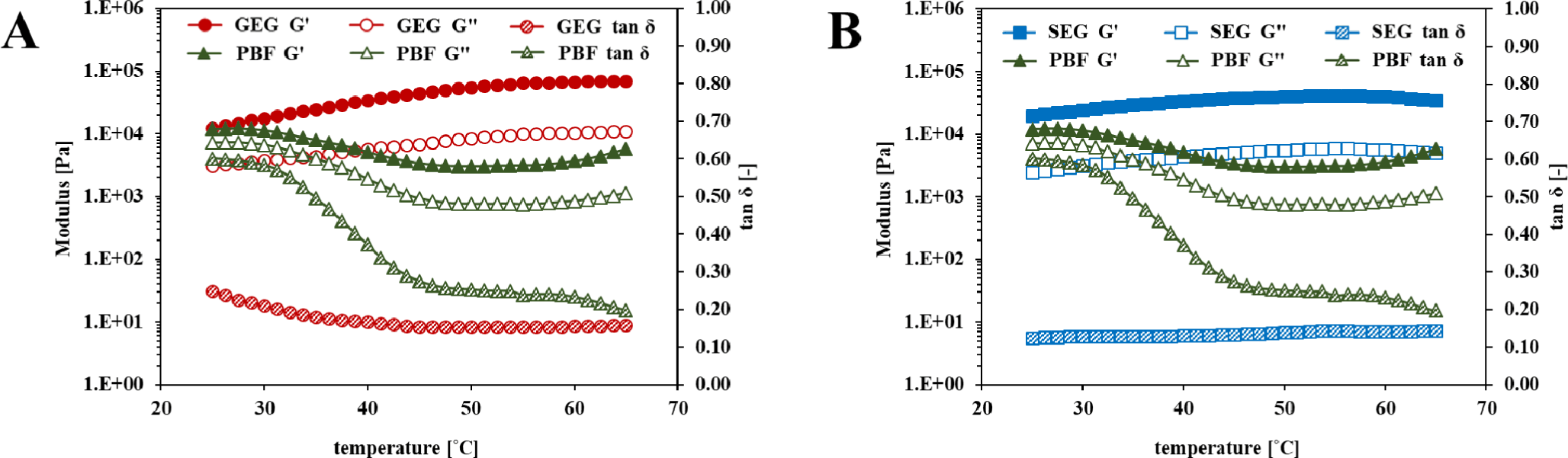
At 25˚C, PBF exhibited a tan δ of approximately 0.60, indicating a natural balance of elastic and viscous properties. While both plant-based analogs formed more highly elastic networks than PBF, GEG (tan δ=0.25) retained a slightly more viscous and flexible character. In contrast, SEG exhibited a remarkably low initial tan δ (0.13), indicating an overly rigid matrix. This relative flexibility in GEG could contribute to better structural cohesion and a more realistic mouthfeel, whereas the excessive rigidity of SEG negatively impacts textural naturalness.
During the continuous heating phase up to 65˚C (Fig. 3), PBF exhibited a gradual decrease in G’ and G’’ up to approximately 45˚C, reflecting partial melting of its lipid fraction. However, it successfully maintained its overall structural integrity because its lipid droplets are encapsulated within a robust network of proteinaceous connective tissue (e.g., collagen) (Tornberg, 2005; Jiménez-Colmenero, 2007). In contrast, conventional plant-based lipids, such as coconut oil, lack this structural matrix (Wi et al., 2020; Li et al., 2025). Upon heating, these pure tropical oils undergo a sharp thermodynamic phase transition, rapidly melting and leading to a drastic plunge in G’ and massive oil exudation. This poses a severe challenge in plant-based meat alternatives, resulting in excessive leakage and a dry, crumbly mouthfeel after cooking.
Neither GEG nor SEG exhibited the structural degradation typical of pure tropical oils. Instead, their G’ values were maintained and even demonstrated a continuous heat-induced reinforcement. In SEG, the rigid, pre-gelatinized carbohydrate network effectively entraps the lipid droplets, resisting structural collapse. However, its tan δ remained constantly low across the temperature sweep. Unlike the dynamic nature of GEG, this statically rigid structure of SEG could impart an unnaturally tough or rubbery texture upon heating, ultimately deteriorating the sensorial quality of the meat analog (Singh et al., 2003; Lu et al., 2019). Meanwhile, in GEG, elevated temperatures promote enhanced protein-protein interactions and cross-linking, as evidenced by the decline in tan δ values and the steady increase of G’ (up to 2.46×10⁴ Pa) (Alves & Tavares, 2019; He et al., 2025). Crucially, this gradual downward trend in tan δ during heating aligns much more closely with the dynamic viscoelastic shifts observed in actual PBF, distinguishing GEG from the unresponsive and overly stiff SEG matrix.
GEG more accurately replicated the authentic thermal behavior expected during meat cooking. In real meat, the connective tissue denatures and shrinks upon heating, imparting a slightly toughened, chewy bite (Christensen et al., 2000; Tornberg, 2005). The heat-induced cross-linking of the gluten network successfully mimics this structural firming. Ultimately, by refusing to melt and dynamically reinforcing its matrix during heating, GEG proved to be a superior system for encapsulating internal oil and preserving a meat-like bite.
To validate the efficacy of the fat analogs, meat patty models were prepared and subjected to cooking conditions. The SEG was excluded because its rigid matrix (high G’ and low tan δ) during heating would impart a tough texture. The GEG was selected because its thermal resilience mimics the heat-induced structural reinforcement of animal tissue. Three lipid sources were compared: PBF (positive control), coconut oil (plant-based fat), and the GEG. The structural behavior of these fats was monitored during the raw mixing stage, the raw cross-sections, the exterior appearance post-cooking, and the internal cross-section (Fig. 4).
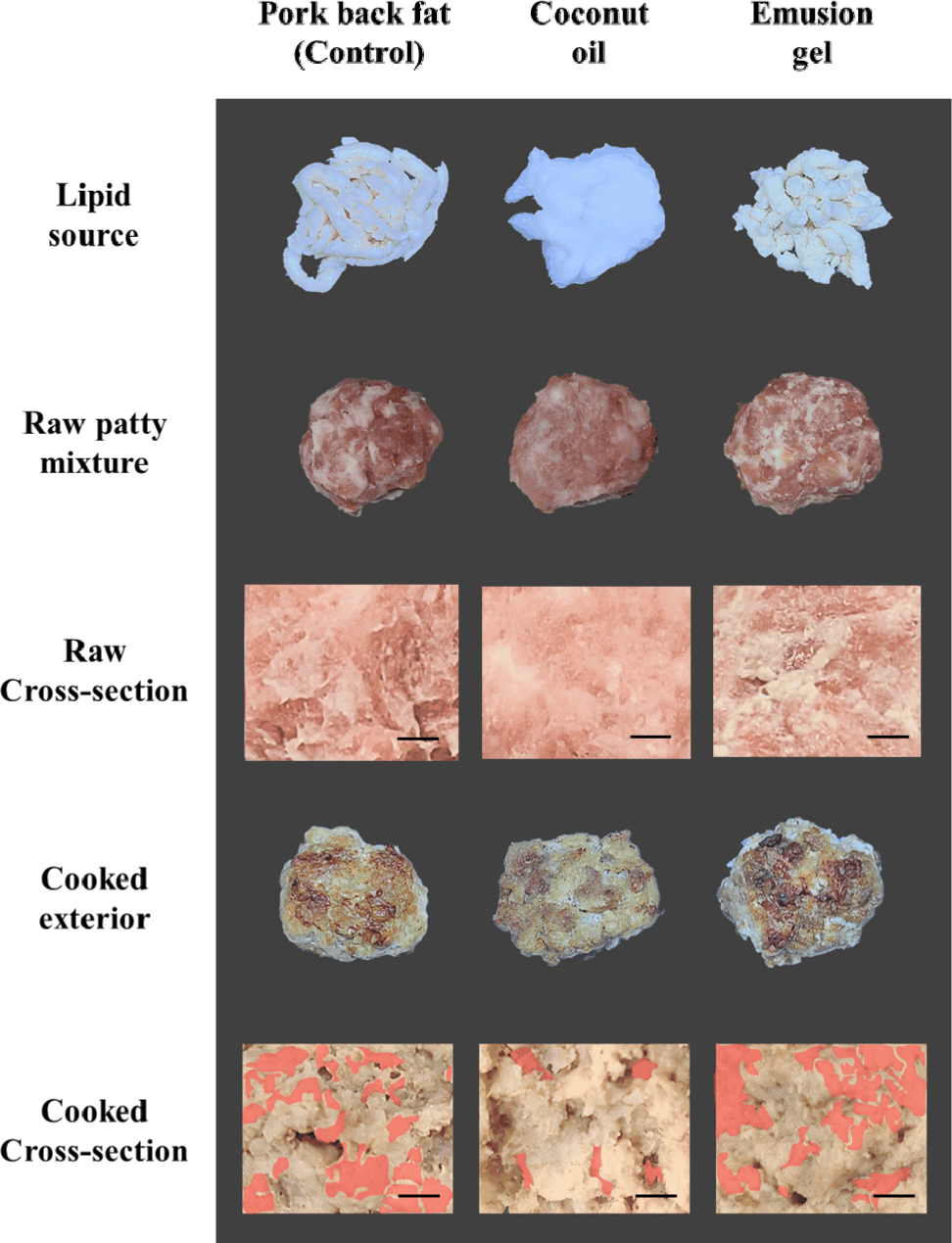
During the preparation of the raw patty mixture, behavioral differences were immediately apparent. Even prior to cooking, the raw cross-sections revealed distinct structural variations. The coconut oil exhibited melting at room temperature and during mechanical friction, resulting in a loss of distinct fat particulate structure. This phase change blurred the physical boundaries between the lipid droplets and the lean meat, yielding a homogenous cross-section. In contrast, the GEG maintained its discrete, solid-like particulate form, mimicking the structural distribution of genuine minced PBF. Both PBF and GEG raw cross-sections exhibited clear separation between the white fat particles and the red lean meat.
These structural disparities became pronounced after the thermal cooking process. The patty formulated with coconut oil suffered from severe lipid exudation, leading to a compromised exterior and a dry, shrunken appearance. Conversely, the patty containing the emulsion gel retained a plump, juicy exterior comparable to the PBF control. To confirm the internal retention of the lipid phase, cross-sectional analyses of the cooked patties were conducted, with the residual fat particles highlighted in red (Fig. 4, bottom row). The cross-section of the coconut oil patty revealed empty voids where the fat had melted and drained away during heating. However, the cross-section of the emulsion gel patty demonstrated numerous, well-preserved fat droplets entrapped within the protein matrix.
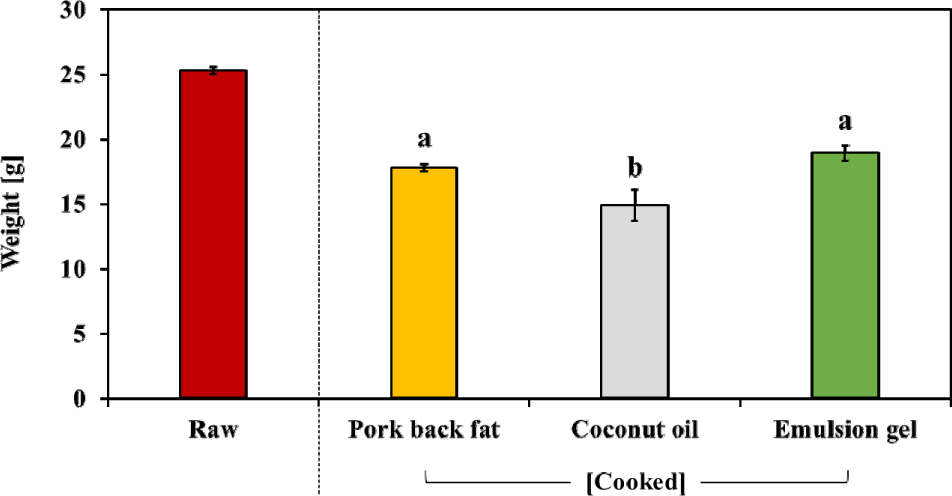
The weight retention of the patties was measured before and after cooking (Fig. 5). Assuming a constant moisture loss from the identical 70% lean meat fraction, variations in total weight reduction reflect differences in lipid exudation. From an initial weight of 25.0 g (containing 7.5 g of lipid), the patty formulated with coconut oil experienced a weight reduction, retaining only 14.9 g (a loss of 10.1 g). In contrast, the emulsion gel patty maintained a cooked weight of 18.9 g (a loss of 6.1 g). The 4.0 g difference corresponds to the additional lipid retained by the gluten matrix, demonstrating a 53.3% reduction in lipid loss compared to the coconut oil. Similarly, the PBF control (17.8 g cooked weight, 7.2 g loss) showed a 38.7% reduction. These results prove that the thermally cross-linked gluten matrix entraps the lipid phase during cooking. Furthermore, Texture Profile Analysis (Supplementary data) confirmed the mechanical suitability of the GEG. Conventional coconut oil was excluded from this measurement because it melts into a liquid at 25˚C, losing measurable structural integrity. Conversely, the GEG exhibited a distinct hardness (555.0 g) and a high springiness (0.95) comparable to the PBF control (0.98). Its lower cohesiveness (0.54) compared to PBF (0.81) indicates an optimal, non-gristly texture. Ultimately, by preventing oil leakage, securing internal moisture, and maintaining intrinsic structural resilience, the emulsion gel is expected to improve sensory attributes by providing sustained juiciness and a meat-like mouthfeel.
Conclusion
In this study, a novel plant-based fat analog was successfully developed by encasing an optimized plant oil blend within an emulsion gel to mimic the flavor, heat stability, and texture of PBF. Through a computer-based optimization method, an oil blend (Optimal Blend 1) was formulated to closely match the complex aroma of real lard. Unlike regular coconut oil, which melts at room temperature, the emulsion gels were kept stable and were even strengthened when heated, behaving much like real animal connective tissue.
When tested in actual meat patties, the GEG was shown to prevent the fat from melting during mixing, and oil was successfully locked in during high-temperature cooking. Overall, this fat system is provided as a practical way to improve the juiciness and bite of plant-based meat products. Moving forward, a more detailed volatile analysis is planned to be used to further improve the flavor-matching approach.


