
Food Engineering Progress
Korean Society for Food Engineering
Reaserch article

콩비지 첨가가 고구마 말랭이의 품질 특성에 미치는 영향

임한별1,2https://orcid.org/0009-0002-0567-0495, 김은진2,3https://orcid.org/0009-0002-2132-8219, 김광표1,3https://orcid.org/0000-0002-3724-4151, 최지환4https://orcid.org/0000-0002-7217-972X, 김수아5,*https://orcid.org/0000-0002-9096-4879
Hanbyul Lim1,2https://orcid.org/0009-0002-0567-0495, Eunjin Kim2,3https://orcid.org/0009-0002-2132-8219, Kwang-Pyo Kim1,3https://orcid.org/0000-0002-3724-4151, Jeehwan Choe4https://orcid.org/0000-0002-7217-972X, Sooah Kim5,*https://orcid.org/0000-0002-9096-4879
1전북대학교 푸드테크학과
2농업회사법인주식회사 말린
3전북대학교 식품공학과
4한국농수산대학교 축산학부 한우전공
5전주대학교 환경생명과학과
1Department of Food Technology (FoodTech), Jeonbuk National University, Jeonju 54896, Korea
2Malin Co., Ltd., Wanju 565823, Korea
3Department of Food Science and Technology, Jeonbuk National University, Jeonju 54896, Korea
4Major of Beef Science, Department of Livestock, Korea National College of Agriculture and Fisheries, Jeonju 54874, Korea
5Department of Environment Science and Biotechnology, Jeonju University, Jeonju 55069, Korea
*Corresponding author: Sooah Kim, Department of Environment Science, Jeonju University, Jeonju 55069, Korea, E-mail: skim366@jj.ac.kr

ⓒ Copyright 2026 Korean Society for Food Engineering. This is an Open-Access article distributed under the terms of the Creative Commons Attribution Non-Commercial License (http://creativecommons.org/licenses/by-nc/4.0/) which permits unrestricted non-commercial use, distribution, and reproduction in any medium, provided the original work is properly cited.

Received: Nov 11, 2025; Revised: Dec 23, 2025; Accepted: Dec 31, 2025

Published Online: Feb 12, 2026

Abstract

Soybean pulp, a nutrient-rich byproduct of soymilk and tofu production, offers potential functional benefits. This study investigated the effects of soybean pulp supplementation on the nutritional and functional properties of dried sweet potato strips. In order to evaluate these properties, protein and dietary fiber content, color parameters, antioxidant activity, and free amino acid levels were analyzed. Soybean pulp supplementation significantly increased the protein and dietary fiber content, antioxidant activity, and free amino acid levels. In particular, glutamic acid, arginine, phenylalanine, threonine, and histidine were identified as the major contributors to the free amino acid profile influenced by the supplementation. Among the tested concentrations, 3% soybean pulp supplementation was found to be the most effective at enhancing the nutritional and functional attributes. These findings therefore suggest that soybean pulp can serve as a functional ingredient to enhance the nutritional and functional properties of dried sweet potato strips, while offering an environmentally sustainable approach to utilizing food byproducts in functional food development.

Keywords: Soybean pulp; Dried sweet potato strips; Food by-product; Functional food

서 론

고구마(Ipomoea batatas)는 메꽃과에 속하는 다년생 초본으로, 재배가 용이하고 단위 면적당 수확량이 높아 여러 국가에서 재배되고 있으며, 주식이나 간식 등 다양한 형태로 가공되어 세계적으로 널리 재배되는 식량작물이다(Jang et al., 2013). 고구마는 탄수화물, 식이섬유, 비타민 C, β-carotene 등의 영양성분이 풍부하고, 안토시아닌 등 다양한 폴리페놀 성분을 함유하고 있어 건강기능식품으로 평가받고 있다(Kim, 2013; Ra et al., 2018). 고구마는 식량자원으로서 높은 가치를 지니지만, 높은 수분 함량으로 인해 저장성을 낮추므로 다양한 가공 형태로 이용되고 있다(Yadav et al., 2006). 고구마의 여러 가공 형태 중 하나인 고구마 말랭이는 증숙, 건조, 후숙 과정을 거쳐 수분을 제거한 제품으로, 고구마 고유의 영양 성분과 맛을 그대로 유지하고, 유통기한을 연장하며 저장성을 향상시킬 수 있어 고구마에 대한 상품성을 제고할 수 있다. 고구마의 영양 성분과 기능성 성분이 그대로 유지되어 에너지원으로 활용될 수 있으나, 단백질 함량이 낮아 균형 잡힌 영양 공급에 한계가 있다. 특히, 단백질 섭취가 중요시되는 노인층의 식생활에서 더욱 불리하게 작용할 수 있다. 이에 따라 고구마 말랭이의 단백질 함량을 보충하고 균형 잡힌 영양소를 공급하기 위해 다양한 시도가 이뤄져야 한다.

콩비지는 식물성 단백질이 풍부한 콩을 가공하는 과정에서 얻어지며, 약 17%의 단백질과 59%의 식이섬유를 함유하고 있어 영양학적으로 매우 중요한 자원이지만 산업적으로 활용되지 못하고 대부분 폐기되고 있는 실정이다(Lee et al., 1987; Lee et al., 1992). 콩비지에는 단백질, 식이섬유 외에도 이소플라본, 칼슘, 철, 감마 아미노뷰티르산 등 다양한 성분이 함유되어 있어 기능성 식품 소재로서의 가치가 있다(Choi & Lee, 1993; Ma et al., 1997). 이러한 영양적 가치가 높은 콩비지를 식품 개발에 적용하려는 연구가 활발히 이루어지고 있다(Choi et al., 2018; Kim et al., 2023b).

콩비지는 단백질과 식이섬유가 풍부한 식품 부산물로써, 고구마와 혼합 시 항산화 활성 증대 등 기능성 향상을 나타낼 수 있는 잠재력을 지닌다. 특히 콩비지의 유용성분은 고구마 말랭이의 영양적 가치를 보완하여 건강 기능성 식품으로서의 개발 가능성을 높일 수 있다.

이에 본 연구에서는 고구마 말랭이에 콩비지를 각각 1%, 3%, 5% 수준으로 첨가하여 시제품을 제조하였으며, 대조군과 비교하여 단백질 및 식이섬유 함량, 유리아미노산 함량, 항산화 활성 등을 분석하였다. 이를 통해 콩비지 첨가가 고구마 말랭이의 영양학적 특성 및 기능성 향상에 미치는 영향을 종합적으로 평가하였다. 특히, 본 연구는 식품 부산물인 콩비지를 활용하여 고구마 말랭이의 영양학적 품질 및 기능성을 동시에 개선하고자 한 연구 중 하나로서, 본 연구의 결과는 식품 부산물을 고부가가치 소재 및 기능성 제품 개발에 활용할 수 있는 가능성을 제시한다는 점에서 중요한 의의를 갖는다.

재료 및 방법

콩비지 추출물 및 고구마 말랭이 제조

두부 제조 후 부산물로 생성된 콩비지는 전라북도 완주군 소재의 구암쌀두부 업체로부터 공급받았다. 콩비지를 민찌기를 이용하여 분쇄한 후 근적외선 건조기(PS-5000A; 신일테크, 대구, 대한민국)를 사용하여 50℃에서 18시간 동안 건조하였다. 건조된 콩비지는 롤밀(돌로라 2단; 풍년기계, 서울, 대한민국)을 이용해 2차로 분쇄하여 입자 크기를 균일하게 하였다. 분쇄된 콩비지는 기존 연구를 바탕으로 180~200℃의 온도로 설정된 로스팅기(SSH-001; 신성푸드머신, 안산, 대한민국)에서 10분간 로스팅하였다(Zzaman et al., 2014; Olasupo et al., 2019). 처리된 콩비지는 밀봉 용기에 담아 냉장 보관하였으며, 고구마 페이스트에 혼합하여 제품 제조에 활용하였다.

고구마는 전라북도산 베니하루카 고구마를 사용하였으며, 껍질을 제거한 뒤 증기로 30분간 찌어 내부까지 충분히 익혔다. 찐 고구마는 선행연구의 기능 및 관능적 특성을 참고하여 콩비지 분말을 각각 1%, 3%, 5%(w/w)로 첨가하여 균질하게 혼합하였으며(Tridtitanakiat et al., 2023; Nur Adibah et al., 2024), 혼합물은 압출기(HY-UBF11B; Hurom, 서울, 대한민국)를 사용하여 페이스트 형태로 제조하였다.

제조된 페이스트는 –20℃에서 24시간 동안 냉동한 뒤, 동결 상태에서 균일하고 점진적으로 해동되도록 설정한 조건인 –9℃에서 10시간 동안 해동 과정을 거쳤다. 해동된 페이스트는 일정 두께와 비율로 절단한 후, 70℃에서 18시간 동안 근적외선 건조기(PS-5000A; 신일테크, 대구, 대한민국)를 사용하여 건조하였다. 건조가 완료된 시료는 레토르트 파우치에 밀봉 포장된 상태로 120℃±5℃에서 5~10분간 살균하여 최종 고구마 말랭이 제품으로 제조하였다.

단백질 및 식이섬유 분석

일반 성분은 식품공전의 방법을 참고하여 다음과 같이 분석하였다(MFDS, 2024). 단백질 함량은 Kjeldahl법에 따라 측정하였다. 시료를 황산과 분해촉진제를 이용해 고온에서 분해한 후(K-439; BUCHI, Flawil, Switzerland), 생성된 암모니아를 증류하여 포집하고(K-365; BUCHI, Flawil, Switzerland), 0.1 N 염산으로 적정(Eco Titrator, Metrohm, Switzerland)하여 총 질소량을 계산하였다. 이 후 질소 함량에 환산 계수를 적용하여 단백질 함량을 최종적으로 계산하였다.

식이섬유 함량은 효소-중량법에 따라 분석하였으며, 시료를 α-아밀라아제, 프로테아제, 아밀로글루코시다제를 순차적으로 처리하여 전분과 단백질을 제거한 후, 잔여물에 95% 에탄올을 첨가하여 침전시켰다. 침전물은 여과 및 건조 과정을 거쳐 총 식이섬유, 수용성 식이섬유, 물불용성 식이섬유로 각각 정량하였다. 잔여물을 550℃의 회화로에서 3시간 동안 회화하여 회분 함량을 측정하였으며, 최종적으로 단백질 및 회분 함량을 보정하여 식이섬유 함량을 산출하였다.

색도

고구마 말랭이의 색도는 코니카 미놀타 색차계(CR410, Konica Minolta; Tokyo, Japan)를 이용하여 시료의 표면에서 측정하였다. 측정은 국제조명위원회(CIE)의 명도(lightness)는 L*값, 적색도(redness)는 a*값, 황색도(yellowness)는 b*값으로 나타내었다. 각 시료는 동일한 조건 하에서 3회 반복 측정하였으며, 평균값으로 색도 지표를 산출하였다.

항산화 분석

항산화분석은 DPPH (2,2-diphenyl-1-picrylhydrazyl) 라디칼 소거능 분석법을 사용하였다(Brand-Williams et al., 1995). 50 mg/mL의 시료 용액을 50% 메탄올에 희석하여 서로 다른 농도로 희석하였다. 0.2 mM DPPH 용액(Merck, Darmstadt, Germany) 100 µL를 서로 다른 농도의 시료 용액 100 µL에 첨가한 후 혼합물을 25℃ 암실에서 30분 동안 반응시켰다. 반응 후 혼합물의 흡광도는 마이크로플레이트 리더기(Multiskan SkyHigh; Thermo Fisher Scientific, Waltham, MA, USA)를 사용하여 518 nm에서 측정하였고, 항산화 활성(AA) 백분율은 다음 식을 사용하여 계산하였다.

AA% = 100 [ ( Ab sample Ab blank ) × 100 / Ab control ]
유리아미노산 분석

고구마 말랭이 1 g에 증류수 10 mL를 첨가하여, 90℃에서 완전히 응고될 때까지 가열하였다. 이후 혼합물을 여과하여 수용성 물층으로 분리한 뒤, 감압 농축기(Rotavapor R-300; BUCHI, Flawil, Switzerland)를 사용하여 농축하였다. 농축액은 0.2 N 구연산나트륨 완충액(pH 2.2) 5 mL로 정용하였다. 0.45 µm 멤브레인 필터(Millipore, Germany)를 사용하여 여과한 후 Agilent HPLC system (Agilent 1260 Infinity; Agilent Technologies, Santa Clara, CA, USA)을 이용하여 유리아미노산을 정량 하였다(Lee et al., 2000). 샘플은 자동 주입기에 의해 OPA (o-phthalaldehyde), borate 완충액, FMOC (9-fluorenylmethyl chloroformate) 시약과 단계적으로 반응하여 유도체화 되었으며, 분석에 사용된 컬럼은 Capcellpak UG120 C18 (250 mm × 4.6 mm, 5 µm, Shiseido, Japan)이었으며, 컬럼 온도는 40℃, 주입량은 10 µL로 설정하였다. 이동상은 A (40 mM NaH2PO4, pH 7.8)와 B (ACN:MeOH:DW=45:45:10, v/v/v)를 사용하였고, 유속은 0.9 mL/min으로 유지하였다. 분석 시간은 총 38분이었으며, 검출은 PDA (photodiode array detector)로 338 nm 및 262 nm 파장에서 수행하였다.

통계분석

모든 분석은 3회 반복 측정을 통해, 평균±표준편차로 표현하였다. 통계분석은 Statistica 통계프로그램(Statistica 7; StatSoft Inc., Tulsa, OK, USA)을 사용하였으며, 각 처리군의 유의성은 Duncan`s multiple range test를 사용하여 p<0.05 수준에서 통계적으로 검증하였다. 유리아미노산 프로파일을 위해 주성분분석을 수행하였다. 주성분분석은 다변량분석 방법으로 여러 변수들의 상관관계를 이용해 변환하여 주성분을 생성하여 차원을 축소하는 기법이다. 이를 통해 각 변수의 기여도를 확인할 수 있다(Ringnér, 2008).

결과 및 고찰

단백질 및 식이섬유 함량

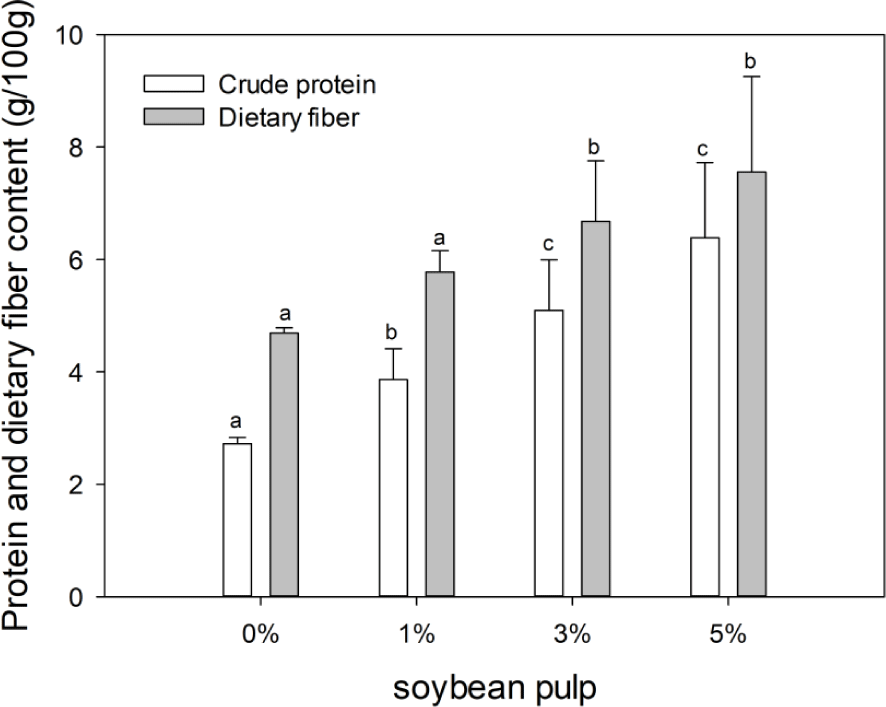
콩비지 첨가에 따른 단백질 및 식이섬유 함량을 분석하였다(Fig. 1). 대조군의 단백질 함량은 2.7 g으로 가장 낮았으며, 이는 일반적인 고구마의 단백질 함량과 유사하였다(Kim et al., 2017; Ra et al., 2018). 콩비지의 첨가량이 증가할수록 단백질 함량은 높아졌으며, 콩비지 3% 첨가 시 1.9배(5.1 g), 5% 첨가 시 2.4배(6.4 g) 증가하였다. 하지만, 콩비지 3% 첨가군과 5% 첨가군의 유의적 차이가 없었다(p>0.05).
fep-30-0-250035-g1
Fig. 1. The amounts of crude protein and dietary fiber of dried sweet potato strips supplemented with different concentrations of soybean pulp. Different letters (a, b, and c) indicate significant differences from the 0% control group (p<0.05). 0%: dried sweet potato strips without soybean pulp; 1%: dried sweet potato strips supplemented with 1% soybean pulp; 3%: dried sweet potato strips supplemented with 3% soybean pulp; 5%: dried sweet potato strips supplemented with 5% soybean pulp.
Download Original Figure

식이섬유 함량도 대조군에서 5.7 g으로 가장 낮았다. 콩비지의 첨가량이 증가할수록 증가하였으며 특히, 5% 첨가 시 1.3배(7.6 g) 증가하였다. 대조군과 콩비지 1% 첨가군의 유의적인 차이는 없었으며, 3% 첨가군과 5% 첨가군에서도 유의미한 차이는 보이지 않았다. 이러한 결과는 콩비지의 첨가는 식이섬유 보충보다 단백질 보충에 더 효과적임을 시사한다. 다만, 본 연구에서는 최종 수분함량이나 건조 전후 중량비를 측정하지 않았기 때문에, 단백질 및 식이섬유의 실제 함량 증가뿐 아니라 수분 감소에 따른 상대적 농축 효과가 영향을 미쳤을 가능성이 있으며, 후속 연구에서 보다 정밀한 평가가 필요하다.

콩비지는 단백질과 식이섬유가 풍부한 식품 부산물로, 이를 고구마 말랭이에 첨가함으로써 고구마 말랭이의 부족한 영양분을 보충할 수 있다. 콩비지의 고단백 및 고식이섬유 성분은 단백질 및 식이섬유 함량 증가에 직접적으로 기여한 것으로 판단된다(Lee et al., 1992; Woo et al., 2001). 본 연구 결과, 콩비지 첨가는 고구마 말랭이의 단백질 및 식이섬유 함량을 유의하게 향상시켰으며, 특히 3% 이상 첨가 시 단백질 및 식이섬유 함량이 통계적으로 유의하지 않아, 실용적이고 효율적인 첨가 수준으로 3%를 권장할 수 있다.

색상

콩비지 첨가에 따른 고구마 말랭이의 색을 측정하였다. 색은 국제조명위원회(Commission internationale de l'éclairage)의 명도(L*), 적색도(a*), 황색도(b*) 체계로 나타냈다(Table 1). 콩비지 첨가에 따라 색의 차이가 있었는데(p<0.05), 콩비지 3%와 5% 첨가군이 대조군과 1% 첨가군에 비해 명도가 유의적으로 높았으며, 콩비지 첨가량 증가에 따라 명도가 증가하는 경향을 보였다. 콩비지 5% 첨가군은 다른 처리군에 비해 황색도가 유의적으로 높았다(p<0.05). 적색도의 경우 처리군 사이에 차이가 있었으나, 콩비지 첨가량에 따른 뚜렷한 경향은 없었다. 이러한 색도 변화는 콩비지의 로스팅 과정에서 발생한 갈변 반응과 식이섬유에 의한 구조적 변화에 기인한 것으로 판단된다(Agume et al., 2017). 고구마는 일반적으로 단백질 함량이 2~3% 정도이다(Kim et al., 2017; Ra et al., 2018). 부족한 단백질 함량을 높이기 위해 콩의 부산물인 콩비지를 첨가할 수 있지만, 콩비지 첨가에 의해 색 특성을 포함하는 제품의 품질 특성과 관능 특성이 달라지면 소비자 수용성(consumer acceptance)에 영향을 줄 수 있다. 본 실험결과 콩비지를 3% 이상 첨가하면 명도와 황색도에 영향을 주는 것으로 나타났다. 따라서 콩비지 3% 미만 첨가가 권장된다. 그러나 단백질 함량을 높이고 품질의 변화를 최소화하며 소비자 수용성에 영향을 주지 않을 최적 함량은 추가 연구가 필요할 것으로 판단된다.

Table 1. The color value of dried sweet potato strips supplemented with different concentration of soybean pulp
0% 1% 3% 5%
L* 23.08±2.23a 21.43±1.22a 30.34±2.93b 36.19±3.10b
a* 34.28±0.28ab 36.10±0.86a 31.52±1.05b 33.81±2.50ab
b* 35.61±3.57a 33.57±2.18a 39.99±0.08a 47.35±3.34b

Different letters indicate significant differences from the 0% control group (p<0.05). 0%: dried sweet potato strips without soybean pulp; 1%: dried sweet potato strips supplemented with 1% soybean pulp; 3%: dried sweet potato strips supplemented with 3% soybean pulp; 5%: dried sweet potato strips supplemented with 5% soybean pulp.

Download Excel Table
항산화 효과

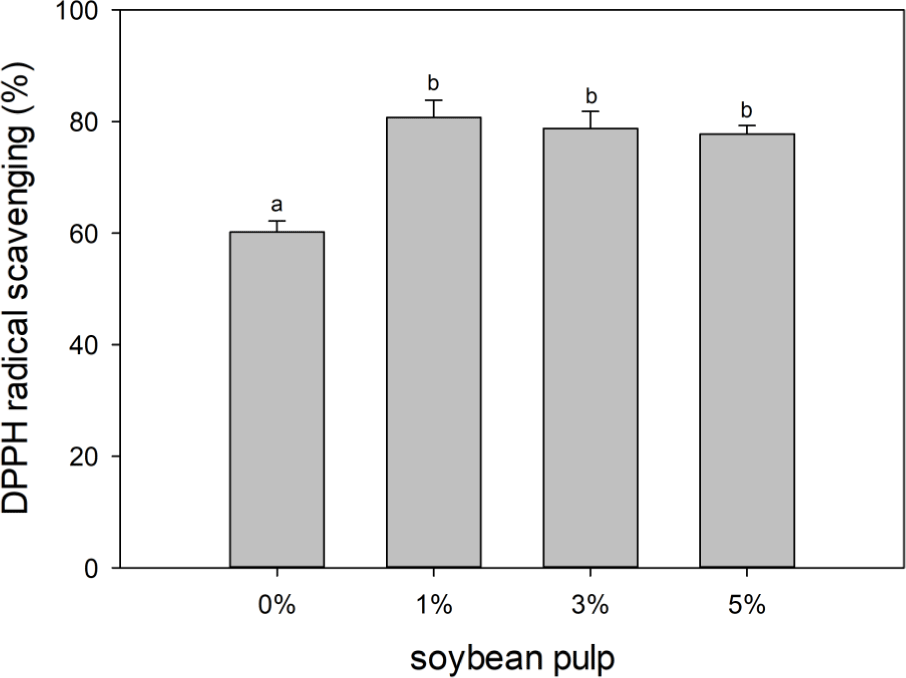
콩비지 첨가에 따른 고구마 말랭이의 항산화 효과를 DPPH 라디칼 소거 능력 측정을 통해 평가하였다(Fig. 2). 대조군과 비교하여 콩비지를 첨가한 군에서 항산화 활성이 유의적으로 증가함을 확인하였으며(p<0.05), 이는 콩비지의 첨가 농도가 높아짐에 따라 증가하는 경향을 나타내었다. 콩비지는 항산화 효과가 있는 물질로 알려져 있으며, 농도 의존적으로 증가한다는 보고가 있다(EA et al., 1997; Kim et al., 2023a, b). 이는 대두의 종피와 자엽에 포함된 genistein, daidzein, chlorogenic acid 등의 다양한 항산화 물질의 영향으로 판단된다(Lim & Jin, 2021). 이는 genistein, daidzein 등의 이소플라본류와 chlorogenic acid 등의 페놀계 화합물이 수소 공여체로 작용하여 DPPH 라디칼을 안정화시키는 기전과 관련이 있으며, 농도 증가에 따라 항산화 활성 증진이 일어나는 것으로 판단된다(Bae et al., 1997; Rüfer & Kulling, 2006; Huang et al., 2023). 본 연구 결과 역시 이러한 경향과 일치하며, 콩비지 첨가가 고구마 말랭이의 항산화 효과를 증대시킴을 보여준다. 다만, 이러한 항산화 증진 효과가 콩비지 자체의 성분, 고구마 성분과의 상호작용, 또는 열처리 과정에서 유도된 새로운 항산화 물질의 생성에 기인한 것인지에 대해서는 구분하기 어렵다는 연구의 한계가 존재한다. 특히, 이소플라본류는 열에 민감한 특성이 있으며, 열처리 과정에서 새로운 활성 물질이 생성될 수 있다. 이에 따라 향후 연구에서는 로스팅 조건, 원료 간 상호작용 등에 의한 주요 항산화 성분을 정량적으로 분석하여, 콩비지 첨가에 따른 생리활성 기작을 명확히 규명할 필요가 있다.
fep-30-0-250035-g2
Fig. 2. The DPPH radical scavenging (%) of dried sweet potato strips supplemented with different concentrations of soybean pulp. Different letters (a and b) indicate significant differences from the 0% control group (p<0.05). 0%: dried sweet potato strips without soybean pulp; 1%: dried sweet potato strips supplemented with 1% soybean pulp; 3%: dried sweet potato strips supplemented with 3% soybean pulp; 5%: dried sweet potato strips supplemented with 5% soybean pulp.
Download Original Figure
유리아미노산 함량

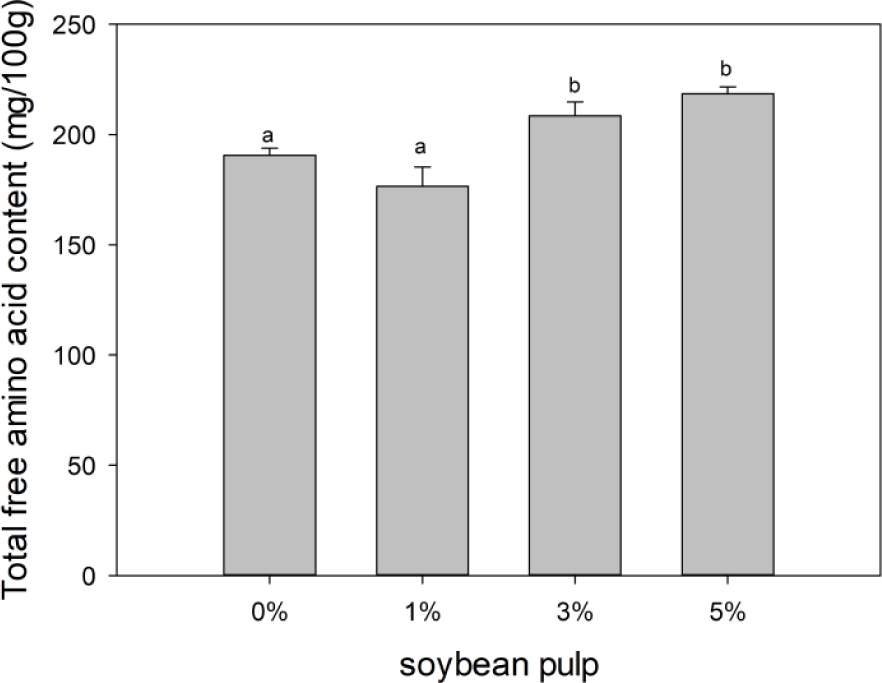
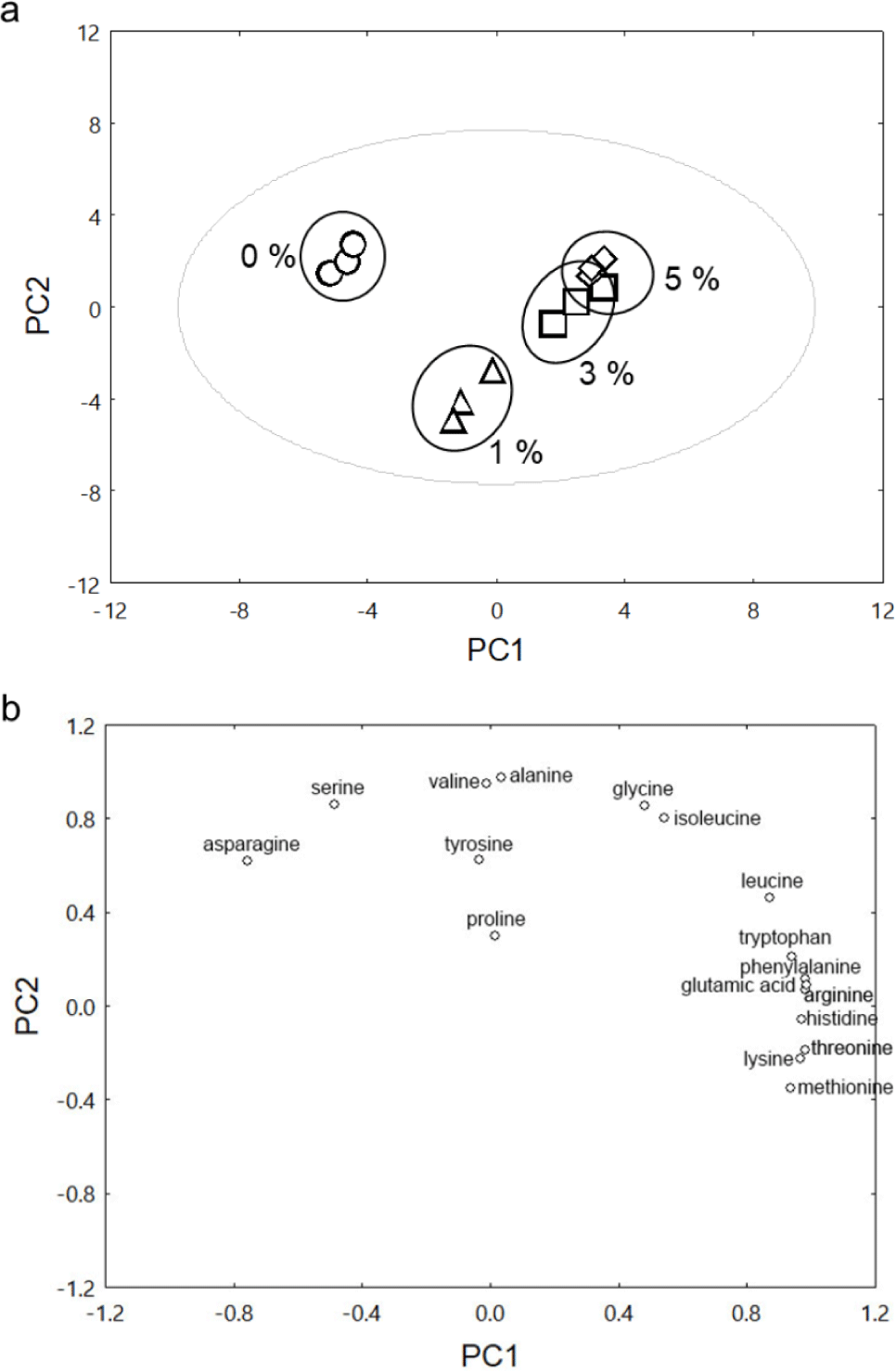
콩비지는 아스파르트산, 글루탐산, 아르기닌 등 다양한 아미노산을 함유하고 있어콩비지 첨가를 통해 고구마 말랭이의 영양을 보충할 수 있다. 본 연구에서 콩비지 첨가에 따른 유리아미노산 함량을 비교 분석하여 영양학적 보완 가능성을 평가하였다. 특히, 유리아미노산은 단백질 가수분해 과정에서 유리된 상태로 존재하며 풍미 개선, 생리활성, 생체 이용률 제고 등 다양한 측면에서 식품의 기능성과 품질 특성에 중요한 역할을 하기 때문에 식품의 품질 특성 평가에 중요한 지표로 활용된다(Yamaguchi, 1967; Okada et al., 2013). 총 17종의 유리아미노산이 검출되었으며, 알라닌, 글루탐산, 아스파르트산의 함량이 가장 높았다(Table 2). 콩비지 3%와 5% 첨가군이 대조군과 1% 첨가군에 비해 유리아미노산의 함량이 유의적으로 높았으며(p<0.05), 콩비지 첨가량이 증가함에 따라 유리아미노산 함량이 증가하는 경향을 보였다(Fig. 3). 또한, 주성분 분석을 통해 콩비지 첨가가 어떠한 유리아미노산에 영향을 미치는지 확인하였다(Fig. 4). 주성분 분석을 통해 PC1과 PC2에서 각각 51.9%와 31.3%으로 높은 설명력을 확인하였다. 콩비지 첨가에 따라 유리아미노산 프로파일이 확연히 달라지는 것을 확인하였다. 콩비지 첨가에 따른 유리아미노산 프로파일 차이는 PC1에서 상대적으로 높은 분리도를 보였으며, PC2에 의한 분리도는 뚜렷하지 않았다. 콩비지 첨가에 따라 글루탐산, 아르기닌, 페닐알라닌, 트레오닌, 히스티딘의 변화에 크게 변하는 것으로 나타났다. 글루탐산은 감칠맛을 증가시키는 아미노산으로 알려져 있으며(Yamaguchi & Ninomiya, 2000; Yamamoto & Inui-Yamamoto, 2023), 아르기닌은 면역력 증진 및 혈관 건강에 도움이 되는 아미노산으로 알려져 있다(Líndez & Reith, 2021; Oyovwi & Atere, 2024). 이러한 아미노산의 증가는 콩비지 첨가가 고구마 말랭이의 맛, 영양, 기능성 향상에 기여할 가능성이 있음을 시사한다. 특히, 아르기닌과 글루탐산은 글루타치온 합성과 관련된 아미노산으로 체내에서 면역 반응 조절 및 항산화 방어 시스템과도 연관이 있다. 이는 단순 영양학적 보완을 넘어서 항산화 및 면역 기능 강화에 기여할 수 있음을 보여준다(Li & Wu, 2022; Oyovwi & Atere, 2024).

Table 2. Free amino acid contents (mg/100g dry weight) of dried sweet potato strips supplemented with different concentration of soybean pulp
0% 1% 3% 5%
Threonine 7.15±0.11a 11.96±0.50b 14.04±0.84c 14.07±0.25c
Tyrosine 2.30±0.04a 2.01±0.19b 1.90±0.11b 2.48±0.14a
Arginine 1.12±0.14a 2.47±0.15b 3.61±0.28c 4.39±0.06d
Alanine 54.67±1.12a 43.80±2.69b 51.45±2.11a 54.40±0.80a
Proline 5.64±1.38 4.86±1.43 5.32±1.16 5.74±1.71
Lysine N.D.a 0.46±0.02b 0.66±0.10c 0.63±0.02c
Histidine 0.49±0.05a 0.72±0.07b 0.94±0.08c 0.89±0.03c
Isoleucine 1.85±0.05a 1.66±0.10b 1.97±0.07a 1.98±0.07a
Leucine 2.75±0.09a 2.74±0.17a 3.23±0.13b 3.30±0.09b
Methionine N.D.a 0.64±0.03b 0.74±0.04c 0.76±0.03c
Phenylalanine 12.45±0.12a 14.08±0.79b 16.42±0.60c 16.50±0.36c
Tryptophan 1.42±0.09a 1.77±0.16b 2.33±0.13c 2.71±0.12d
Valine 3.82±0.13a 3.07±0.20b 3.67±0.14a 3.66±0.15a
Glutamic acid 48.20±2.23a 58.56±3.30b 70.70±1.61c 73.54±0.99c
Aspartic acid 33.18±2.49a 16.74±1.80b 18.53±0.78bc 20.26±1.22c
Serine 14.07±0.65a 9.54±0.52b 11.34±0.44c 11.55±0.38c
Glycine 1.56±0.09a 1.32±0.06b 1.62±0.08ac 1.73±0.03c

Different letters indicate significant differences from the 0% control group (p<0.05). 0%: dried sweet potato strips without soybean pulp; 1%: dried sweet potato strips supplemented with 1% soybean pulp; 3%: dried sweet potato strips supplemented with 3% soybean pulp; 5%: dried sweet potato strips supplemented with 5% soybean pulp.

Download Excel Table
fep-30-0-250035-g3
Fig. 3. The amount of free amino acids of dried sweet potato strips supplemented with different concentrations of soybean pulp. Different letters (a and b) indicate significant differences from the 0% control group (p<0.05). 0%: dried sweet potato strips without soybean pulp; 1%: dried sweet potato strips supplemented with 1% soybean pulp; 3%: dried sweet potato strips supplemented with 3% soybean pulp; 5%: dried sweet potato strips supplemented with 5% soybean pulp.
Download Original Figure
fep-30-0-250035-g4
Fig. 4. PCA score plot (a) and loading plot (b) of dried sweet potato strips supplemented with different concentrations of soybean pulp. 0%: dried sweet potato strips without soybean pulp; 1%: dried sweet potato strips supplemented with 1% soybean pulp; 3%: dried sweet potato strips supplemented with 3% soybean pulp; 5%: dried sweet potato strips supplemented with 5% soybean pulp.
Download Original Figure

유리아미노산은 미각 수용체와 상호작용하여 다양한 풍미를 유발하고, 생체이용성이 높은 상태로 존재하기 때문에, 식품의 품질 및 기능성 평가에 있어 중요한 지표로 활용된다(Kato et al., 1989; Wu et al., 2003; Wielen et al., 2023). 따라서 본 연구 결과는 콩비지를 활용한 식품 개발 시 유리아미노산 조성 변화가 제품의 품질 특성 향상에 기여할 수 있음을 보여준다. 향후 이러한 변화가 기능성 향상 및 소비자 만족도에 미치는 영향을 평가하는 것이 필요하다.

한편, 단백질 및 식이섬유 함량, 색도, 항산화 효과, 유리아미노산 함량 결과 등에서 1% 콩비지 첨가군은 단백질 및 식이섬유 함량, 색도, 항산화 효과, 유리아미노산 함량 등에서 3%와 5% 첨가군과는 다른 경향을 보였다. 이는 낮은 농도에서 시료 혼합의 균일성이 확보되지 않았거나 측정 과정에서의 오차 등이 복합적으로 영향을 미쳤을 가능성을 시사하며, 낮은 농도의 콩비지를 사용할 경우 혼합 공정의 균일성을 높이기 위한 추가 연구가 필요하다.

결 론

본 연구에서는 콩비지를 첨가한 고구마 말랭이의 품질 특성을 평가하였다. 단백질 및 식이섬유 함량, 명도 및 황색도, 항산화 활성, 유리아미노산 함량은 콩비지를 첨가한 군에서 대조군보다 더 높은 값을 나타냈으며, 특히 3% 및 5% 첨가군에서 뚜렷한 증가가 관찰되었다. 콩비지 첨가에 따라 유리아미노산 프로파일의 변화를 확인하였으며, 글루탐산, 아르기닌, 페닐알라닌 등의 증가가 두드러졌다. 이러한 결과를 종합해 볼 때, 3% 콩비지 첨가가 영양 및 기능성 측면에서 우수한 결과를 보여 고구마 말랭이 제조를 위한 최적의 첨가 조건으로 판단된다. 본 연구 결과는 콩비지 첨가는 맛, 영양, 기능성 향상에 기여할 뿐 아니라 식품 부산물의 효과적인 활용에 측면에서도 중요한 의미를 갖는다. 식품 부산물인 콩비지를 활용함으로써 고구마 말랭이의 부가가치를 높일 수 있을 뿐 아니라 식품 부산물의 활용을 통한 고부가가치 식품을 생산하기 위한 기초 자료로 활용될 수 있을 것으로 기대된다.

Conflict of interests

No potential conflict of interest relevant to this article was reported.

Acknowledgements

This research was supported by the Regional Innovation System & Education (RISE) program through the Jeonbuk RISE Center, funded by the Ministry of Education (MOE) and the Jeonbuk State, Republic of Korea (2025-RISE-13-JJU).

Data availability

Upon reasonable request, the datasets of this study can be available from the corresponding author.

Authorship contribution statement

Conceptualization: Lim H, Kim S.

Data curation: Lim H, Kim KP, Choe J, Kim S.

Formal analysis: Lim H, Kim E.

Methodology: Lim H, Kim E, Choe J.

Software: Lim H, Kim S.

Validation: Lim H, Kim E, Kim KP.

Investigation: Lim H, Kim E, Choe J.

Writing - original draft: Lim H, Choe J, Kim S.

Writing - review & editing: Lim H, Kim E, Kim KP, Choe J, Kim S.

Ethics approval

Not applicable.

References

1.

Agume ASN, Njintang NY, Mbofung CMF. 2017. Effect of soaking and roasting on the physicochemical and pasting properties of soybean flour. Foods. 6: 12.

2.

Bae EA, Kwon TW, Moon GS. 1997. Isoflavone contents and antioxidative effects of soybeans, soybean curd and their by-products. J. Korean Soc. Food Sci. Nutr. 26: 371-375.

3.

Brand Williams W, Cuvelier M, Berset C. 1995. Use of a free radical method to evaluate antioxidant activity. LWT-Food Sci. Technol. 28: 25-30.

4.

Choi HM, Choi UK, Jang HS, Lee NH. 2018. Changes in the characteristics of noodle by the addition of biji powder. J. Korean Soc. Food Sci. Nutr. 31: 919-925.

5.

Choi Y, Lee S. 1993. Cholesterol-lowering effects of soybean products (curd or curd residue) in rats. J. Korean Soc. Food Nutr. 22: 673-677.

6.

EA B, TW K, GS M. 1997. Isoflavone contents and antioxidative effects of soybeans, soybean curd and their by-products. J. Korean Soc. Food Sci. Nutr. 26: 371-375.

7.

Huang JH, Xie MX, He L, Song XP, Cao TZ. 2023. Chlorogenic acid: a review on its mechanisms of anti-inflammation, disease treatment, and related delivery systems. Front. Pharmacol. 14: 1218015.

8.

Jang GY, Li M, Lee SH, Woo KS, Sin HM, Kim HS, Lee JS, Jeong HS. 2013. Optimization of processing conditions and selection of optimum species for sweet potato chips. J. Korean Soc. Food Sci. Nutr. 26: 565-572.

9.

Kato H, Rhue MR, Nishimura T. 1989. Role of free amino acids and peptides in food taste. Flavor Chem. 13: 158-174.

10.

Kim HS. 2013. Physicochemical properties of sweet potato starch reclaimed from sweet potato processing sludge. Korean J. Food Sci. Technol. 45: 747-753.

11.

Kim S, Seo D, Park J, Kim SN, Choi Y, Nam JS, Lee JH, Kim SC, Yang MO, Hwang J. 2017. Food composition of raw, boiled, and roasted sweet potatoes. Korean J. Community Living Sci. 28: 59-68.

12.

Kim YS, Cheon H, Kim BH. 2023a. Effects of soy pulp extract mixtures on antioxidant activity and blood alcohol metabolism. J. Converg. Food Spatial Des. 18: 93-103.

13.

Kim YS, Kwon JH, Jin LS, Cheon HS, Kim JS, Kim B. 2023b. The effects of soy-pulp extract and low-calorie sweetener on quality characteristics and glycemic index of breakfast snack. J. Converg. Food Spatial Des. 18: 57-70.

14.

Lee H, Yoo B, Byun S. 2000. Differences in free amino acids between Korean ginsengs and mountain ginsengs. KSBB J. 15: 323-328.

15.

Lee M, Kim K, Lee G. 1987. Microbiological studies and biochemical changes in fermented soybean curd residue during fermentation. Korean J. Food Sci. Technol. 19: 520-527.

16.

Lee WJ, Choi MR, Sosulski FW. 1992. Separation of tofu-residue (biji) into dietary fiber and protein fractions. Korean J. Food Sci. Technol. 24: 97-100.

17.

Li P, Wu GY. 2022. Important roles of amino acids in immune responses. Br. J. Nutr. 127: 398-402.

18.

Lim JY, Jin SY. 2021. Quality characteristics of vegan nutritional bars with fermented soybean curd residue powder. J. Korean Soc. Food Sci. Nutr. 50: 849-857.

19.

Líndez A, Reith W. 2021. Arginine-dependent immune responses. Cell. Mol. Life Sci. 78: 5303-5324.

20.

Ma C, Lui W, Kwok K, Kwok F. 1997. Isolation and characterization of proteins from soymilk residue (okara). Food Res. Int. 29: 799-805.

21.

MFDS. 2024. Announcement of Partial Revision of Regulations on Criteria and Standard of Health Functional Foods. Ministry of Food and Drug Safety.

22.

Nur Adibah L, Nor Afizah M, Wan Zunairah WI, Syed Muhammad SK. 2024. Development of fibre-rich okara-based expanded snack via single screw extrusion. Food Res. 8: 48-56.

23.

Okada K, Gogami Y, Oikawa T. 2013. Principal component analysis of the relationship between the d-amino acid concentrations and the taste of the sake. Amino Acids. 44: 489-498.

24.

Olasupo AZ, Timothy BO, Precious OB. 2019. Optimization of roasting conditions of soya beans using response surface methodology. Ann. Food Sci. Technol. 20: 460-471.

25.

Oyovwi MO, Atere AD. 2024. Exploring the medicinal significance of L-arginine mediated nitric oxide in preventing health disorders. Eur. J. Med. Chem. Rep. 12: 100175.

26.

Ra HN, Kim JS, Kim GC, Choi SY, Han SK, Chung MN, Kim KM. 2018. Nutrient components and physicochemical properties of Korean sweet potato according to cultivars. J. Korean Soc. Food Cult. 33: 597-607.

27.

Ringnér M. 2008. What is principal component analysis? Nat. Biotechnol. 26: 303-304.

28.

Rüfer CE, Kulling SE. 2006. Antioxidant activity of isoflavones and their major metabolites using different in vitro assays. J. Agric. Food Chem. 54: 2926-2931.

29.

Tridtitanakiat PC, Hernández Estrada ZJ, Rayas Duarte P. 2023. Modeling the influence of okara flour supplementation from time-temperature drying treatment on the quality of gluten-free roll produced from rice flour. Foods. 12: 3421.

30.

Wielen Nvd, Vries Sd, Gerrits WJ, Lammers Jannink K, Moughan PJ, Mensink M, Hendriks W. 2023. Presence of unabsorbed free amino acids at the end of the small intestine indicates the potential for an increase in amino acid uptake in humans and pigs. J. Nutr. 153: 673-682.

31.

Woo EY, Lee KA, Lee OH, Kim KS. 2001. Composition of okara produced from soymilk processing. Korean J. Food Nutr. 14: 562-567.

32.

Wu HC, Chen HM, Shiau CY. 2003. Free amino acids and peptides as related to antioxidant properties in protein hydrolysates of mackerel (Scomber austriasicus). Food Res. Int. 36: 949-957.

33.

Yadav AR, Guha M, Tharanathan RN, Ramteke RS. 2006. Changes in characteristics of sweet potato flour prepared by different drying techniques. LWT-Food Sci. Technol. 39: 20-26.

34.

Yamaguchi S. 1967. The synergistic taste effect of monosodium glutamate and disodium 5′-inosinate. J. Food Sci. 32: 473-478.

35.

Yamaguchi S, Ninomiya K. 2000. Umami and food palatability. J. Nutr. 130: 921S-926S.

36.

Yamamoto T, Inui Yamamoto C. 2023. The flavor-enhancing action of glutamate and its mechanism involving the notion of kokumi. npj Sci. Food 7: 1-6.

37.

Zzaman W, Bhat R, Yang TA. 2014. Application of response surface methodology to optimize roasting conditions in cocoa beans subjected to superheated steam treatments in relevance to antioxidant compounds and activities. Dry. Technol. 32: 1104-1111.